
Enrobed in Thankfulness
The Christian is enrobed in thankfulness (Colossians 3:15) by 1) Engaging in Prayer, 2) Elevating the Mind, 3) Showing Kindness. Each person should examine his thanks.


The Christian is enrobed in thankfulness (Colossians 3:15) by 1) Engaging in Prayer, 2) Elevating the Mind, 3) Showing Kindness. Each person should examine his thanks.

Mark 9:40 and Matthew 12:30 do not conflict. One man was not physically with Jesus yet worked for Him; the Pharisees were with Him but spiritually against Him.
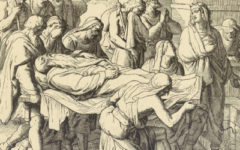
Are saints who die in paradise or asleep? Jesus promised the thief paradise (Luke 23:43). The dead in Christ are "asleep" only until the resurrection.

Faith, the first Christian grace (2 Peter 1:5-9), shows us 1) Who People Really Are, 2) Their Greatest Need, 3) How to Love Them. Each person should live graciously.

We raise our Ebenezer (1 Samuel 7:7-12) when we 1) Depend on God, 2) Acknowledge His Help in Prayer, 3) Remember His Saving Help. Each person should see God's help.

Holidays and the Bible (Romans 14:5, 6): 1) Why Society Has Holidays, 2) Are They Authorized? 3) What About Christmas and Easter? Each person should know the principles.

Repentance (Luke 24:46, 47) 1) Is Based on Faith, 2) Changes the Mind, 3) Changes the Lifestyle, 4) Results in Forgiveness. Each person should be able to explain it.

Be peacemakers (Matthew 5:3-10) because 1) God Is the God of Peace, 2) Jesus Was a Peacemaker, 3) Christians Are Told to Be Peaceful. Each person should pursue peace.

In this lesson we will study that mercy and salvation comes from God’s word because God’s word gives us 1) Answers, 2) Liberty, 3) Confidence. The hearer should understand that when we walk in God’s word we gain mercy and salvation.

In Philippians 2:10, "those under the earth" are people who have died and been buried. All will bow before Jesus, so let's obey Him now and not be condemned.

Jesus gave the seventy-two power over demons for their mission (Luke 10), but told them to rejoice that their names are written in heaven. That is our emphasis too.
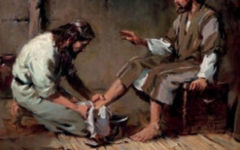
What does it mean to be a servant (Matthew 20:20-28)? 1) Have a Servant's Attitude, 2) Know What to Do, 3) Serve. Each person should better understand true service.

Is cheating wrong? Yes. The Bible forbids cheating your neighbor (Leviticus 19:13). Christians must provide honorable things in the sight of all (2 Corinthians 8:21).
Blasphemy against the Holy Spirit (Luke 12:10) was the Pharisees' charge that Jesus cast out demons by Satan. It describes hearts so hardened they will not repent.

At the end of time (1 Thessalonians 4:13-18) 1) Jesus Returns, 2) The Dead Are Raised, 3) Judgment Comes, 4) All Enter Eternity. Each person should know these events.

Life in God's law from Psalm 119:33-40 means 1) Commitment, 2) Cheer, 3) Confirmation. Each person should understand how God's law gives us life.

Overcoming discouragement (Philippians 4:4-9): 1) Own Your Life, 2) Stop Being Someone You Are Not, 3) Give Yourself to Others, 4) Trust Jesus. Each person can overcome.

"The kingdom of heaven is at hand" (Matthew 4:17): 1) Its Meaning to First-Century Jews, 2) Jesus' Meaning, 3) Its Meaning Today. Each person should apply it to life.
In John 14, Jesus encourages us by telling us about 1) A Place, 2) A Plan, 3) A Person, 4) The Power of Prayer. Each person may be encouraged by His words.

To follow holiness (Hebrews 12:14) we must 1) Follow After God, 2) Follow After Purity, 3) Follow After Distinctiveness. Each person should know what this means.