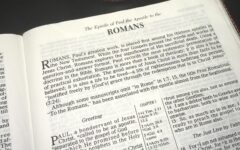
Calvinism and Romans – Part 8
It is those who are “in Christ” who are saved. Anyone can be saved, because anyone can be in Christ who will hear and obey the gospel.


It is those who are “in Christ” who are saved. Anyone can be saved, because anyone can be in Christ who will hear and obey the gospel.
We wrestle with God’s grace because 1) Grace is Costly, 2) Grace is Complimentary, and 3) Grace is Conditional. Each hearer will understand these three key notions about grace.
So what do the verses in Romans 9:10-18 mean? God’s choosing Jacob over Esau appears individual.
Paul’s point in Romans 9:1–9 is that salvation is in the Messiah, not in the Law of Moses, and that both Jews and Gentiles can be saved in Christ without that Law.

How does love overcome pride? By action: 1) Love Invests, 2) Love Invites, and 3) Love Initiates. When we invest, invite, and initiate, love’s action overcomes our pride.
In Romans 3, Paul sets forth the truth that Jews cannot be saved outside of Jesus Christ. This was both frightening and offensive to the Jew.
The message of the gospel is that God saves everyone who believes, both Jews and Gentiles, through Jesus Christ. Jesus was God’s choice from the beginning.
Paul’s efforts in the book of Romans are to show that the gospel of Christ is the power of God to salvation for everyone who believes, for the Jew first and also for the Greek.

Wrestling with God’s sacrifice means that God sacrifices His 1) System, 2) Station, 3) Son. Each person should understand that God’s sacrifices set an example for us to make sacrifices in our lives also. We want to help each one of us understand what it means to sacrifice.
Calvinists love to cite Romans 9:14-18 as foundational to their teaching on individual and personal election. The context of Romans paints a different picture.

In this lesson, we will talk about the power of God: 1) Its existence, 2) Its instrument, and 3) Its limits. Each person should understand more regarding God's power.
Calvin’s beliefs were a reaction to the things happening in the Catholic church at the time, and not originally formulated in scripture. The notion that Calvinism is the Bible and the Bible is Calvinism is flat out false.

There’s a story of an elderly man who always made sure that the porch light was changed on the front of the church building. Because of his diligence to this simple chore, the light always glowed brightly for 56 years. At a ripe old age, the man passed away and after a time the light bulb went out.
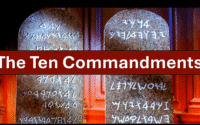
In this lesson on the Ten Commandments, we’ll look at #3, taking the Lord’s name in vain. We will notice the 1) content of the command and 2) the consequence of the command.

We all have questions about God and one young man had a question that had not been answered, so he came to Jesus looking for the answers A young man came running to Jesus and said, "Good Master, what good thing shall I do that I may have eternal life?" (Matthew 19:16).
We wrestle with God over church attendance when we ignore... 1) God's command, 2) Church Unity, 3) True Worship. Each person should know that attendance at the assembly is necessary to being a faithful Christian and to help everyone understand what the scriptures teach on this topic.

Faith is such an important aspect of our relationship with God. According to the Bible, “faith cometh by hearing, and hearing by the word of God.” (Romans_10:17). Many who misunderstand faith believe it is merely a mental acknowledgment of one’s belief in Jesus as the Son of God. But God’s Word shows that faith is believing and heeding the information God has revealed.

God wants you to have a good grip on 1) The Gospel, 2) Salvation, 3) Christ, 4) Eternal Life. Each hearer should be encouraged to be faithful to the Lord and never give up.

"I came not to call the righteous, but sinners to repentance." If there is one passage that sums up the glorious scheme of redemption it would be Luke 5:32 where Jesus said, What God desires most is for mankind to be saved (1 Tim. 2:3-4). With each passing day God demonstrates His patience and "longsuffering to usward."

A second corollary to the truth that God cannot lie is this: God will always keep his promises whether the promise is positive or negative. In Isaiah 55:11 God says, “So shall My word be that goes forth from My mouth; It shall not return to Me void, But it shall accomplish what I please, And it shall prosper in the thing for which I sent it.”