
For Such a Time as This
God raises up servants "for such a time as this" (Esther 4:14) when they are 1) Humble, 2) Willing, 3) Wise. Each person should open himself to God's purposes.


God raises up servants "for such a time as this" (Esther 4:14) when they are 1) Humble, 2) Willing, 3) Wise. Each person should open himself to God's purposes.

It is more blessed to give (Acts 20:35). In giving 1) We Focus on God, 2) We Join God's Community, 3) We Value Others. Each person should give spiritually, not by duty.

The parable of the lost sheep (Luke 15:1-7): 1) Sheep Become Wayward, 2) Sheep Have Worth, 3) Recovering Them Is Wonderful. Each person should seek the wayward.

God's word strengthens us (Psalm 119:25-32) 1) In Inwardness, 2) In Weariness, 3) In Faithfulness. Each person should turn to God's word in the difficulties of life.

Ruth and Naomi show loving faithfulness (Ruth 1:16-17): 1) Its Significance, 2) Sacrifice, 3) Services, 4) Sanctification. Each person can improve relationships.

In eternity we will be united in love (1 Peter 4:13) 1) Because God Is Love, 2) Because He Desires Our Unity, 3) Because We Will Long to Belong. Each person can rejoice.

The father who fears the Lord (Psalms 127-128) 1) Centers His Home on God, 2) Sees Children as a Reward, 3) Walks in God's Ways, 4) Loves His Wife. Each will be blessed.

Standing in integrity (Psalm 41:12) means 1) Doing Right, 2) Keeping Promises, 3) Standing Up for Truth, 4) Trusting God. Each person should understand integrity.

Why remember Jesus (Luke 22:14-20)? 1) It Is the Apostles' Doctrine, 2) Grateful Hearts Remember, 3) The Father Wants It. Each person should remember Him weekly.

The pure in heart are blessed (Matthew 5:3-10): 1) They Are Sincere, Simple, Serene, 2) Their Lives Are Clean, 3) They Will See God. Each person should be pure.

In eternity we get a new body (1 Peter 4:13) with no more 1) Death, 2) Disease, 3) Corruption, 4) Temporal Concerns. Each person can rejoice in this hope of heaven.

God's word reveals wondrous things (Psalm 119:17-24) about 1) God, 2) Self, 3) Sinners. Each person should be able to tell what wondrous things this passage reveals.

Jesus on evangelism, part 2 (Matthew 10): 1) Handle Objections, 2) Expect Rejection, 3) Be Courageous, 4) God Rewards. Each person should evangelize as Jesus taught.

I know my mother loved me (1 Samuel 2:19) because she 1) Disciplined Me, 2) Nursed Me, 3) Fed and Clothed Me, 4) Taught Me God's Word. Each person should recall her love.

The ABCs of loving our children (Titus 2:4): give them 1) Attention, 2) Boundaries, 3) Christ. Each person should remember these ABCs in the home.
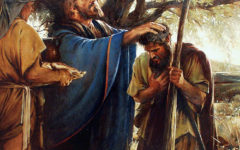
Why did Melchizedek meet Abram in Genesis 14? We may not know his reason, but Hebrews 7 shows God wanted him there to foreshadow Christ's priesthood.
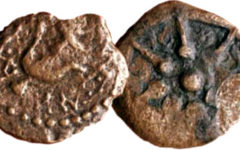
The widow's two mites (Mark 12:41-44) show that the quality of giving matters more than the amount. Like the rich young ruler, we must trust God, not our riches.
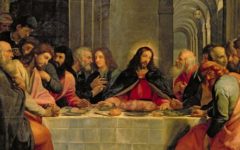
The song "Come, Share the Lord" (1 Corinthians 11:23-26): the Supper 1) Declares Oneness, 2) Remembers Jesus' Death, 3) Awaits His Return. Each person should apply it.

Psalm 90, a prayer of Moses, is a saint's closing prayer. It is a prayer 1) Of Benediction to the Lord, 2) Respecting the Brevity of Life, 3) In Bequest to the Living.

Jesus on evangelism, part 1 (Matthew 10:1-10): 1) Get Others Involved, 2) Know Your Objective, 3) Have Something to Say, 4) Trust God. Each person should evangelize.