
Feel Right About Doing Right
Doing right may not feel right at first, but restrained behavior can lead to virtuous behavior (2 Peter 1:3-11). Put away pride and you will feel right about doing right.


Doing right may not feel right at first, but restrained behavior can lead to virtuous behavior (2 Peter 1:3-11). Put away pride and you will feel right about doing right.

Satan had nothing on Jesus because He was without sin (John 14:30). If you are in Christ, Satan has nothing on you either, because he had nothing on Him.

An introduction to church history: 1) The Church of the New Testament, 2) The Falling Away, 3) The Restoration. Each person should gain a framework for studying it.

Heaven is like the Grand Canyon (John 14:1-3): it's grand, there's no cheap way across, the way is narrow, and you must go to the water. Each person should know the way.
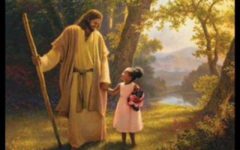
Put your faith in Jesus (Galatians 2:20): 1) He Will Not Deceive, 2) He Models Faithfulness, 3) He Forgives. Each person should trust Him, obey Him, and stay faithful.

The blessings of obedience (Hebrews 5:8-9): it is 1) Good in Itself, 2) Not Burdensome, 3) Goal Oriented, 4) A Source of Life and Joy. Each person should learn to obey.

Jesus learned obedience and became the author of salvation to all who obey Him (Hebrews 5:8-9). Pride keeps us from obeying; remove it and obedience becomes joyful.

Church leaders set examples (John 13:13-15) by 1) Understanding Truth, 2) Demonstrating It, 3) Speaking It Clearly. Each person should see that leadership needs example.

"Blessed are the meek" (Matthew 5:5): 1) Who Are the Meek? 2) How Will They Inherit the Earth? 3) What Are the Applications? Each person should study these questions.

What is the difference between literal and figurative language in the Bible? Figures like the shepherd of Psalm 23 help us grasp spiritual realities we cannot see.

May I attend two different churches? Jesus built one church (Matthew 16:18). If two congregations teach the truth, either is fine, but attend where the truth is taught.

Make this the year of the Lord (Isaiah 61:1-3): 1) Preach to the Lost, 2) Warn the Erring, 3) Exhort the Faithful. Each person should see how Jesus fulfilled this text.

Principles for cooperation (Philippians 2:1-11): pursue peace, let love live, judge righteously, listen liberally, watch your words. Each person should apply them.

What will you do with Jesus (Matthew 27:22)? 1) Some Reject Him, 2) Some Merely Eulogize Him, 3) Some Wholly Accept Him. Each person should accept Him as man and God.

God gave us Jesus so we can identify with Him and become a new creation (2 Corinthians 5:17). Put on Christ in baptism and become what God intended you to be.

"Blessed are they that mourn" (Matthew 5:4): 1) Traits of Mourning, 2) Traits of Comfort, 3) Practical Lessons. Each person should see how mourning leads to comfort.

The Holy Spirit's work in the early church (John 14:26) was 1) Promised, 2) Performed, 3) Propagated, 4) Perfected. Each person should understand that work.

Before we evangelize (Acts 8:1-4), we must 1) See That Souls Are Lost, 2) Commit for the Long Term, 3) Believe the Gospel Is Good News. Each person should prepare.

Questions on holidays (Romans 14:5, 6): 1) Why do we have them? 2) Does the New Testament authorize them? 3) What about Christmas? Each Christian should know God's view.

Psalm 119:1-8, the behavior of the blessed: 1) Blessed Conduct, 2) Binding Commands, 3) Bona Fide Commitment. Each person should become more familiar with Psalm 119.