Second Corinthians Ten Through Thirteen
An audio sermon on 2 Corinthians 10-13, where Paul defends his apostleship and speaks of strength in weakness. The post contains the text of these four chapters.

An audio sermon on 2 Corinthians 10-13, where Paul defends his apostleship and speaks of strength in weakness. The post contains the text of these four chapters.

In this lesson, we will study why Jesus died on the cross. To understand that Jesus brings unity to mankind in the church, we must understand God’s original design in the creation. When we understand this, we will understand that Jesus died on the cross to restore unity between God and man, and between man and man. Each member should understand that Jesus died on the cross to bring unity in the church as the restoration of His purposes in creation.

This is an emotional phenomenon known as attachment: when we identify with it to the point of ownership. We take everything said or done about the subject “personally.”
An audio sermon on three questions answered in Acts 2 on the day of Pentecost, when three thousand were baptized. The post contains the full text of Acts chapter 2.

Justice for the Earth entails: 1) Common Justice, 2) Cry for Justice, 3) Coming Justice. Each listener should understand that justice in the earth now is incomplete, but not final. One day God’s justice will be finished through Christ Jesus.
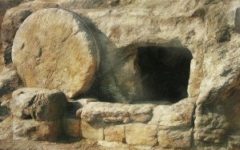
Paul wrote in 2 Corinthians 5:15, “and He died for all, that those who live should live no longer for themselves, but for Him who died for them and rose again.” You can’t do that just on Easter Sunday.

God provides for the saints by 1) Sealing the Saints of the Past, 2) Saving the Saints of the Present, 3) Sheltering the Saints from the Future. The hearer should marvel at the wonderful blessings that God has given to his saints in the past, present, and future.

We want to do a study of Luke 14:15-24. From this passage we learn about God's 1) Invitation, 2) Expectations, 3) Anger, and 4) Love in relationship to the proud and humble. God rejects the proud but exalts the humble.
An audio sermon on 2 Corinthians 7-8, on godly sorrow that leads to repentance and the grace of generous giving. The post contains the text of both chapters.

I wonder what would happen if Jesus gave a “State of the Church” speech to us today? We really do not have to wonder. He gave such a speech in Revelation 2-3 when he evaluated the seven churches of Asia.
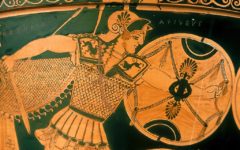
Man's unique position in relationship to God affords him special status regarding his life; neither beast nor other men may so take man's life except they forfeit their own for their crime. This is not to say that the one who deserves such punishment cannot be punished by other men. Certainly, if God commanded men to kill the one who murders, then men may so carry out God's command without offense to God.

We can’t save ourselves because 1) just one sin separates us from God, 2) sin distorts our efforts to do good, 3) the good works we do are not sufficient to save us. The listener should understand that only by trusting in Christ Jesus can we be saved.

Christians also have an obligation to respect government. Romans 13:1-7 and 1 Peter 2:13-17 speak to this
An audio sermon on 2 Corinthians 5-6, on our heavenly house, the ministry of reconciliation, and being separate from the world. The post contains the chapters' text.

In this lesson we will examine the office of the deacon, its 1) History, 2) Responsibilities, 3) Qualifications, and 4) Rewards. The hearer should be able to locate and discuss the New Testament passages dealing with the office of the deacon. Considering the appointment of new deacons, I hope to be able to focus thought upon this office and the one being considered for appointment.

Christianity is a long-distance run. Hebrews 12:1 says, “Therefore we also, since we are surrounded by so great a cloud of witnesses, let us lay aside every weight, and the sin which so easily ensnares us, and let us run with endurance the race that is set before us.” This a long-distance run, and for it we need proper nutrition. What is the spiritual food that we need? It is Jesus Himself.

In this lesson, we will study Revelation 5:9-10 and see that the Lamb is worthy because he has given us His: 1) Sacrifice, 2) Salvation, 3) Station. The objective of this lesson is to understand what Christ has done for us and why He is worthy of our praise.

This sermon outline is about church growth. The church grows through 1) Change, 2) Humility, 3) Security. The objective of this lesson is to understand these basic principles of church growth and embrace them.