Recovering from Spiritual Narcissism – Part 6
Everyone knows that person who wallows in self-pity. Ask them how they are doing, and their response is “I’m OK, I guess.”

Everyone knows that person who wallows in self-pity. Ask them how they are doing, and their response is “I’m OK, I guess.”
In this study, we will look at different kinds of risks that Christians must take to be Christians. There is the risk of 1) Leaving the ones we love, 2) financial loss, 3) our life and health, 4) public rejection and failure. Each Christian should know what kind of risks he or she faces each day in living the Christian life and be prepared to handle those risks understanding that while there may be "risks" while we are upon the earth, the outcome is guaranteed. I want to spur the brethren on toward taking more risks in these areas because the greater risk one takes the greater reward that is associated with the risk.
Do we hold back from teaching the gospel to those who don’t look, smell, act, or live like us because they are “dirty”? God didn’t accept Peter’s reticence, and He won’t accept ours either because He wants everyone to be saved (1 Timothy 2:4).

2 Corinthians 12:8-10 “For this thing I besought the Lord thrice, that it might depart from me. And he said unto me, My grace is sufficient for thee: for my strength is made perfect in weakness. Most gladly therefore will I rather glory in my infirmities, that the power of Christ may rest upon me. Therefore I take pleasure in infirmities, in reproaches, in necessities, in persecutions, in distresses for Christ’s sake: for when I am weak, then am I strong.”
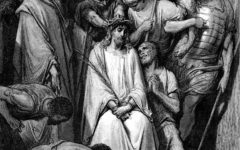
In this lesson, we will look at what Jesus did not do that most people would have done given the same circumstances. The listener should understand that Jesus was extraordinary in His behavior. We will conclude that Jesus was divine.

May God bless our mothers, and may our mothers be godly.

The point is this: the assumption of restoration does not necessarily imply non existence of that which needs to be restored as the question seems to imply. We recognize that restoration means that that which needs to be restored has deteriorated badly. In what sense? In the sense that not very much of the original is left. But that means that SOME of the original is still there. How can it be restored? By following the pattern for the original. In the case of the church, where do we find that pattern? In the New Testament.
When the reformers, who eventually ended up creating the Protestant movement, withdrew from the Catholic church, they also renounced Catholic tradition as a source of authority for religious practices. In its place, they demanded that things be settled "sola scriptura" with scripture only.

We praise the Maker of our mothers because He made our mothers to be 1) Kind, 2) Compassionate, and 3) Caring. Each listener should be able to understand why God made mothers and the importance of their role within the home.
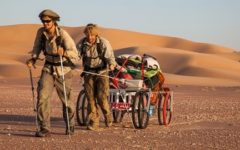
As we were running, I matched his pace, talked to him about the run, and encouraged him to keep going; we had great conversation and fellowship. As we were running, walking, talking, and enjoying our time together, I realized that our run illustrated the concept of the Greek word parakletos.
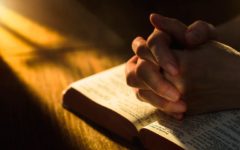
In this lesson, we will look at what it means to be a friend of God. One is God's friend when he 1) Loves God with all his heart, soul, and mind, 2) Does what God wants him to do simply because God has asked us to do it, 3) Tells others about what a great friend God is. Each hearer should be able to understand what it takes to be a friend of God. I want everyone to be motivated to make God their friend.
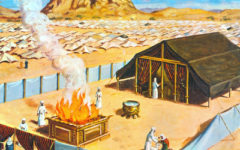
Jesus died on the cross as the perfect sacrifice for sin because 1) Justice Demands Payment 2) Old Testament Sacrifices were Insufficient, 3) A Perfect Sacrifice Was Needed. This lesson explains why we need a perfect sacrifice and why Jesus was the perfect sacrifice.
The spiritual narcissist judges others to feel righteous while ignoring his own sins. Jesus says to first take the log out of your own eye (Matthew 7:1-5).

There is much we can learn from a person with Down Syndrome.
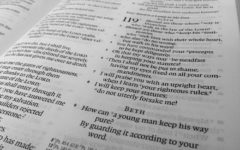
We will study Psalm 119:89-96: God is faithful to save His saints because 1) He is Dependable, 2) His Saints Delight in His Word, and 3) He Delivers from the Enemy. We study to gain more familiarity with Psalm 119 and the wonderful word of God and to understand how God saves His saints through His faithfulness and theirs.
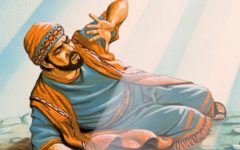
In the conversion of Saul we see 1) Confrontation, 2) Contrition, 3) Concern, and 4) Conversion. The objective of this study is to understand the conversion of Saul so that we may explain it to others. Saul's conversion serves as a model for everyone's conversion.

To have the right attitude in prayer we must ask in 1) Faith, 2) Thanksgiving, 3) Constancy. Each person should understand these prerequisites to prayer and why they are prerequisites. The aim of this lesson is to stir up remembrance, exhort, and encourage all to pray more fervently, more thankfully, and constantly.

In this lesson, we will look at why it is wrong to use instrumental music. That each listener would understand why we should not use instrumental music in worship because it is sinful.
Christians ought to respond when a member of Christ’s body is harmed. Will we take care of one another?