
What is Truth and Can You Know It?
This lesson seeks to address the question of can we know truth in our relativistic culture. The objective of this lesson is to equip high school and college students to defend their faith regarding truth.


This lesson seeks to address the question of can we know truth in our relativistic culture. The objective of this lesson is to equip high school and college students to defend their faith regarding truth.
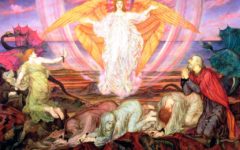
In this lesson, we will study Revelation 20 and note the death of the Dragon: 1) The Dragon is Bound, 2) Christ and the Saints Reign for 1000 Years, 3) The Dragon is Destroyed, 4) His Servants are Judged. The objective for this lesson is to study Revelation 20 and learn its message.

Grumpy Cat may be funny, but a grumpy lifestyle is contrary to God's word. The Christian's life should be marked by joy (Philippians 4:4) and a cheerful disposition.

Doing things "in advance" means either borrowing from the future or preparing for it. Like Moses (Hebrews 11:24-26), will we live for the moment or prepare for eternity?
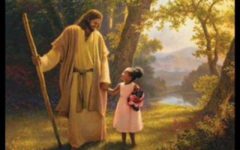
To live for Jesus means 1) Being an All-In Disciple, 2) Having an Amazing Destiny, 3) Following Jesus All Day. We will learn from the lyrics of this great song and the Bible what it means to live for Jesus.
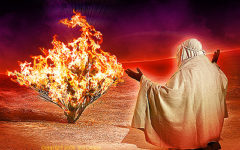
In this lesson, we will learn what it means to fear God: 1) Emotionally, 2) Behaviorally, and 3) Spiritually. Each person will understand that God has commanded us to fear Him so as to order our lives correctly, and failure to fear God leads to destruction.

God provided escape from the famine because Joseph 1) Acted with Integrity, 2) Trusted in God’s Power, 3) Didn’t Give in to Vindictiveness. The hearer should understand that escaping from difficulties requires faith in God on our part to do His will even when we don’t see God working.
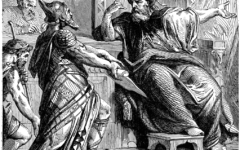
In this lesson, we will look at the text of 2 Samuel 24:1-25 and note some lessons. Our goal is to learn the text of 2 Samuel 24 and make application.

Yes, the Bible is inerrant as originally given because it is inspired by God, who does not lie (2 Timothy 3:16). Alleged contradictions do not hold up under study.

A fossil of a snake with limbs fits Genesis 3:14, yet scientists still deny what the Bible says about creation. Evolution fails because life does not come from non-life.

“Now from the sixth hour until the ninth hour there was darkness over all the land” (Matthew 27:45). The Greek word for “darkness” in this verse is skotos. There is nothing especially significant about the word indicating the quality of darkness. The word may be used to talk about a pitch black darkness such as in Tartarus in Jude 1:13, or “outer darkness” (Matthew 22:13), or it may be used to describe a shadow-like darkness (Matthew 4:16; Luke 1:79).

God the Father continues to give His Holy Spirit to those who ask. The question is, how do we ask? Do we ask with an obedient faith? Or do we ask out of a sense of selfish desire? If it is the former, then God certainly gives the Holy Spirit to those who believe and obey. If the latter, then God is not going to indulge a person’s fleshly desires.

In this lesson we will seek to answer the question “What is love?” We will note: 1) its origins in God, 2) that it is a free act, 3) its currency in relationships, 4) that it is a gift. We seek to learn more about the nature and character of love.

In Psalm 2 we see the eternal reign of the Messiah: 1) The Enemies of the Messiah 2) The Establishment of the Messiah, 3) The Edict of the Messiah, 4) The Ends of the Messiah. The hearer will understand that Psalm 2 prophecies about the eternal reign of the Messiah. Opposition to God’s plans will not succeed but only result in failure and wrath from God.

We should all desire understanding from God and to understand the Bible. Understanding comes from 1) Effort, 2) Knowledge, 2) Unity. The hearer should understand how we should desire understanding. The aim of this lesson is to set forth ways for desiring understanding.

Is being a "good person" enough? There is none who does good (Romans 3:12). We must be found in Christ with His righteousness (Philippians 3:8-9) by obeying Him.

The world tries to make sin look glamorous, but the price of sin was the death of the Son of God (Romans 5:6). Don't cheapen Christ's sacrifice by glamorizing its cause.

We affirm the sanctity of life because 1) It has worth, dignity, and value—it is holy, 2) it is worth living, 3) it is worth protecting. In this lesson, I hope to counter the message of our contemporary culture that life is cheap, meaningless, and worthless for those who have no utility and affirm the sanctity of life.

In this lesson about Bible Commandments, we will look at the commandment, “Worship God!” To worship God we must 1) Understand Worship, 2) Acknowledge God as the Object of Worship 3) Put Away Idols that Compete with Worshipping God. Each hearer should know what the command “Worship God” means.

In this lesson we look at some practical lessons from David’s sin with Bathsheba. We want to understand what characterizes sin and to know when we are involved in it.