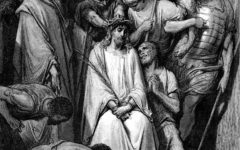
Jesus died on the cross to fulfill the scriptures related to his 1) Death, 2) Burial, 3) Resurrection. The listener should know that Jesus’ death on the cross was in fulfillment of prophecy that proves he is the Messiah.
The counter-cultural truths that our culture refuses to accept are: 1) Homosexuality is a destructive lifestyle; 2) Religious people are more charitable than non-religious people; 3) Religious people live better quality lives than non-religious people. Each one will know that being correctly religious is morally praiseworthy, but accepting these prevailing cultural beliefs promotes immorality. Each one will know that it is an objectively good thing to be correctly religious.
God’s word guides us through all of life’s circumstances: 1) Affliction, 2) Worship, 3) Decisions, 4) Persecution, and 5) The Future. Each hearer should know that they can trust in God’s word to guide them.
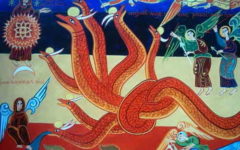
In this lesson we will study through Revelation 12 and note how the dragon fails: 1) To Destroy the Messiah, 2) To Take Over Heaven, 3) To Conquer God’s People. Each hearer should be encouraged that Satan cannot conquer us as long as we remain in Christ.
The Christian can truly have personal peace in his life by following some practical instructions from scripture. Each hearer should know how to have personal peace in his life. This lesson brings scripture to bear on some practical ways to have personal peace.
Paul does not say there was no law in the day of Abraham or even before that. That is not his point at all. He merely says that where there is no law then there is no transgression. What then is the point? His point is that when God gave the promise to Abraham, that promise was given without law. Hence that promise was made to Abraham upon the condition of faith, not upon the condition of law.
In Revelation 10-11 we see preparations made for the coming of the King and His kingdom. These preparations include 1) The Completion of the Mystery of God, 2) The Committing of God’s Message to the Prophets/Apostles, 3) The Coming of the Two Witnesses, 4) The Coronation of the Messiah. The hearer should be able to explain that the events of Revelation 10-11 are preparatory for the coronation of the Messiah. I hope that the listener will have a better understanding of Revelation 10-11.
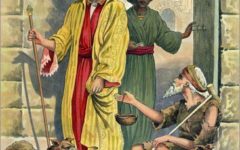
In this lesson we will study the story of the rich man and Lazarus and notice: 1) The characters, 2) The circumstances, 3) The cries of the rich man, 4) The conclusions of the story. Each listener should be able to understand the story, repeat it, and explain it. I hope to to familiarize everyone with this story and teach its lessons so as not to fall into similar circumstances as the rich man.
Jesus died on the cross so that we could be forgiven of sin. Forgiveness means that 1) Every person has an opportunity to be forgiven. 2) God no longer holds our sins against us, 3) We have a standard upon which to forgive one another. Each listener should know what he needs to do to obtain forgiveness, where that puts him in a relationship to God, and to his fellow.
What will be the fate of the rest? “But as for those whose hearts follow the desire for their detestable things and their abominations, I will recompense their deeds on their own heads,” (Ezekiel 11:21-22).
In this study, we will look at different kinds of risks that Christians must take to be Christians. There is the risk of 1) Leaving the ones we love, 2) financial loss, 3) our life and health, 4) public rejection and failure. Each Christian should know what kind of risks he or she faces each day in living the Christian life and be prepared to handle those risks understanding that while there may be "risks" while we are upon the earth, the outcome is guaranteed. I want to spur the brethren on toward taking more risks in these areas because the greater risk one takes the greater reward that is associated with the risk.
In this lesson, we will look at what Jesus did not do that most people would have done given the same circumstances. The listener should understand that Jesus was extraordinary in His behavior. We will conclude that Jesus was divine.
When the reformers, who eventually ended up creating the Protestant movement, withdrew from the Catholic church, they also renounced Catholic tradition as a source of authority for religious practices. In its place, they demanded that things be settled "sola scriptura" with scripture only.
We will study Psalm 119:89-96: God is faithful to save His saints because 1) He is Dependable, 2) His Saints Delight in His Word, and 3) He Delivers from the Enemy. We study to gain more familiarity with Psalm 119 and the wonderful word of God and to understand how God saves His saints through His faithfulness and theirs.
To have the right attitude in prayer we must ask in 1) Faith, 2) Thanksgiving, 3) Constancy. Each person should understand these prerequisites to prayer and why they are prerequisites. The aim of this lesson is to stir up remembrance, exhort, and encourage all to pray more fervently, more thankfully, and constantly.
In this lesson, we will look at why it is wrong to use instrumental music. That each listener would understand why we should not use instrumental music in worship because it is sinful.