
Category: Kevin’s Korner

  • Authentic Christianity Means Justification by Faith

    Authentic Christianity Means Justification by Faith because 1) Christians Received the Spirit by Faith, 2) Abraham Was Justified by Faith, 3) The Prophets Confirm It, 4) Christ Died for It. Each person should understand that we are justified by faith in Christ. I want to encourage each person to trust in Christ for justification/righteousness.

  • He Ate with Publicans and Sinners – Part 1

    One of the criticisms that Jesus enemies often employed was that He ate with the publicans and sinners. We find this criticism recorded for us in the following passages: Matthew 9:10, 11; 11:19; Mark 2:15, 16; Luke 5:30, 7:34, 15:1. Jesus associated with these people to teach them the gospel.

  • The Woman with the Alabaster Jar

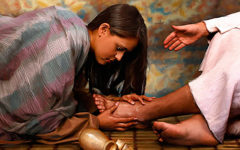
    We will study Luke 7:36-50 and see that 1) Jesus responds to all invitations in some way, 2) Jesus chose to see the good in people first, not the bad, 3) Jesus sees and knows real sacrifice, 4) Jesus rewards faith in Him. In this lesson we want to understand how Jesus looks at people so that we can see them the way He does.

  • Think on Things that are Just or Righteous

    To think on things that are just or righteous, we must think carefully about 1) Our Own Behavior, 2) Our Behavior in Relationship to Other People, and 3) Our Behavior in Relationship to God. Each should understand that thinking on things that are just or righteous means keeping in mind our relationship with our fellow man and our relationship with God.

  • Covenant Faithfulness in the Book of Ruth

    In this lesson, we will look at the relationship of Ruth and Naomi. It is a relationship characterized by loving faithfulness. We want to explore: 1) The Significance of Faithfulness, 2) The Sacrifice of Faithfulness, 3) The Services of Faithfulness, and 4) The Sanctification of Faithfulness. By understanding healthy Bible relationships, we can improve our own.

  • The Silent Epidemic – Part 3

    In contrast to our burgeoning physical waistlines, we are spiritually wasting away. Spiritually, we need to have a balanced diet as well; we need less spiritual sugar and fat; we need more spiritually healthy choices. It isn't easy to give up a diet of sugar and fat, after all, they taste so good! Similarly, it isn't easy to divorce ourselves from spiritual sugar and fat (i.e. the "feel good" approach to spirituality). So, how can we improve our spiritual diet?

  • The Silent Epidemic – Part 2

    In contrast to our burgeoning physical waistlines, we are spiritually wasting away. Spiritually, we need to have a balanced diet as well; we need less spiritual sugar and fat; we need more spiritually healthy choices. It isn't easy to give up a diet of sugar and fat, after all, they taste so good! Similarly, it isn't easy to divorce ourselves from spiritual sugar and fat (i.e. the "feel good" approach to spirituality). So, how can we improve our spiritual diet?

  • Why did Jesus Die on the Cross?

    Aids to Remembrance

    In this lesson we will set forth some aids or helps to remembering the death of Jesus during the Lord's Supper. That each would be able to recall these aids when reflecting on the Lord's Supper. To help each person focus upon the Lord's Supper while partaking of it.

  • The Silent Epidemic – Part 1

    In contrast to our burgeoning physical waistlines, we are spiritually wasting away. Spiritually, we need to have a balanced diet as well; we need less spiritual sugar and fat; we need more spiritually healthy choices. It isn't easy to give up a diet of sugar and fat, after all, they taste so good! Similarly, it isn't easy to divorce ourselves from spiritual sugar and fat (i.e. the "feel good" approach to spirituality). So, how can we improve our spiritual diet?

  • When We All Get to Heaven

    We must keep our aim on heaven because heaven is a 1) Prepared Place, 2) Perfect Place, 3) Pure Place, and 4) Prized Place. I want to encourage everyone to continue to be faithful so that they may attain heaven one day.

  • friend

    The Way of Wisdom – Part 3

    James does not say HOW God gives wisdom. He just states the fact of it. Perhaps some expect God to just miraculously insert wisdom into their psyche like King Solomon. (Where are these geniuses?) That’s not going to happen. Even Jesus grew in wisdom (Luke 2:52). It’s a process, like our prayers for patience. Wisdom comes from thoughts; thoughts come from words; words come from experience; experience comes from practice.

  • prayer

    The Way of Wisdom – Part 2

    Putting confidence in God is also wise. It is a shift away from confidence in self. The tension between God and self is the ultimate test of faith because each person is always there with himself to challenge whether he will trust in God.

  • A Word Fitly Spoken

    The goal is to teach the things which the obedient tongue will utter before God – namely, it will be a tongue that 1) speaks truth, 2) utters praise, 3) reflects good judgment, and 4) edifies and to help all realize the importance of a word fitly spoken.

  • prayer

    The Way of Wisdom – Part 1

    The very act of praying for wisdom produces instant wisdom because it is wise to open oneself up to the possibility of receiving wisdom. The act of doubting that God will give wisdom is itself unwise because one closes oneself off to the possibility of receiving wisdom, which, in and of itself, is not wise. It is wise to desire wisdom.