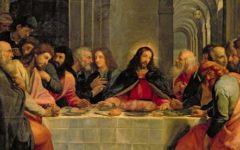
Should We Enlarge The Lord’s Supper? (Part 1)
Some want to enlarge the Lord's Supper into a full meal. But Jesus gave simple elements to remember Him weekly (Acts 20:7). It does not need to be enlarged.


Some want to enlarge the Lord's Supper into a full meal. But Jesus gave simple elements to remember Him weekly (Acts 20:7). It does not need to be enlarged.

Many of those parents had regrets that they did not sit down and talk to their children about these most important things. Don’t let that child be yours! We must talk to them about the truth. The church can help, but ultimately, the child will watch and listen to the parent. Send the right message clearly and often.
Many of those parents had regrets that they did not sit down and talk to their children about these most important things. Don’t let that child be yours! We must talk to them about the truth. The church can help, but ultimately, the child will watch and listen to the parent. Send the right message clearly and often.
Today’s media merely reflects a much worse problem: Many people really do think and act like the sordid situations on the sitcoms. Their perverse behavior drives the content and output of media today. The problem is the sin of immorality. The church (and every individual member) has a responsibility to combat this evil in our society. How can we fight this when it seems like such a big problem?
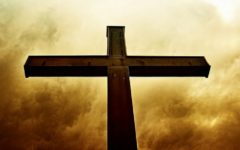
Jesus lived a perfect, sinless life. Admittedly, we don’t (1 John 1:8-10). However, we must try NOT to sin as it is an affront to God and if we live in sin, we will be separated from God (Isaiah 59:2). Jesus always chose not to sin. He was tempted directly by Satan, but He chose not to sin (Matthew 4:1-11). He was tempted by Peter’s weakness (Matthew 16:22-23), but He chose not to give in.
I cannot think of a more encouraging thought than to think of the title of this article—Jesus Chose! We have the great blessing of being able to look back upon the events that led up to the cross and learn from the life of Christ how we can live our life as well.

The religion of Jesus Christ is NOT irrational. In fact, when Paul went to preach the gospel to others, the scriptures say that he "reasoned" with them (Acts 17:2; 18:4; 18:19; 24:25). We are admonished to "prove all things" (1 Thess.5:19). John tells us to "try the spirits" (John 4:1). In dealing with matters of religion, we are to "speak as the oracles of God" (1 Peter 4:11).
How many times have you heard this one, "It doesn't matter what you believe." Don’t take that one to driving school. It will not pass. "The sign says 'STOP' but it just doesn't matter what you believe." Would you tell a police officer this? Imagine the conversation: "Officer, I know I was doing 80 in a 35, but, it doesn't matter what you believe."
How many times did Jesus say to reasoning adults, “Go ask your parents whether or not I am the Messiah?” He never did. What did He say? “You search the Scriptures, for in them you think you have eternal life; and these are they which testify of Me” (John 5:39). It wasn’t “go ask your parents,” but “the scriptures teach.”
Take a few salesmen and set them before potential clients and tell them to say, "You need to buy my product because I feel in my heart that it is right for you." The clients will leave. They want competence, not sentimentalism. They want good reasons to buy your product, not sappiness.
The decision of what religion to practice is of utmost importance! Man’s soul is more valuable than any automobile, house, or job. So, why would one put the decision of what to do with his soul in the hands of a child—and not only that, but merely based upon a child's likes and dislikes?!

God doesn't want us to persist in the sickness of sin. God wants us to be cured from the sickness of sin. We can be cured if we trust in God's word and stop practicing sin. God expects us to repent of our sins; that means we must change our life and stop sinning. That doesn't mean that we will be perfect; but we don't have to be perfect to stop making sin a deliberate and purposeful habit. We must cease doing evil and do good!
Some operate under the delusion of the once-saved-always-saved doctrine. They think they have a license to sin because they can't lose their salvation. Such false doctrines are contrary to the plain teaching of scripture. Hebrews 10:26 27 says, "For if we sin willfully after that we have received the knowledge of the truth, there remains no more sacrifice for sins, but a certain fearful looking for of judgment and fiery indignation, which shall devour the adversaries."
Do you want to be sick? I have been sick many times with some kind of virus. Sometimes it was the flu; sometimes is was something else. Being sick, however, there was one thing I knew; I didn't want to be sick! People who have Munchausen's Syndrome, however, not only want to be sick, but, and as odd as it sounds, they like being sick.
One of the blessings of knowing the battle is the LORD is that we can have assurance in knowing the end will turn out according to His blessed will. As James said about Job, “you have heard of the patience of Job, and seen the end of the Lord, that the Lord is very pitiful, and of tender mercy” (5:11). Jehovah can be trusted, and we must lean upon Him and not our own understanding (Proverbs 3:5).
Paul exhorted or encouraged Timothy to encourage the congregation in Ephesus to do something for all men. By inspiration of the Holy Spirit, the church is to offer supplications, prayers, intercessions and thanksgivings for all men. What a great blessing to be given such purposes and truly we can say as the people of God, we have something to do daily (Philippians 2:12).
What type of man was David? Did David love the Lord? Was David perfect? Was David willing to make things right after his failures? David was known as the sweet psalmist of Israel (2 Samuel 23:1). Being from the tribe of Judah, he was from the kingly tribe of which Jesus also came. He was obedient to the will of God in that he understood roles and authority.
What does it mean to be faithful? Like anything else in education, we must define our terms, lest we find ourselves becoming a law unto ourselves (Romans 2:14). Faithful in the Hebrew language means, “to be confirmed, to be established, to be reliable and trusty”. In the Greek language it means, “to execute a command or the discharge of official duties, to trust in God’s promises”.

Truly, those who have suffered are able to comfort those who are suffering. Paul writes in 2 Corinthians 1:3, 4 “Blessed be the God and Father of our Lord Jesus Christ, the Father of mercies and God of all comfort; who comforteth us in all our affliction, that we may be able to comfort them that are in any affliction, through the comfort wherewith we ourselves are comforted of God.”
This weak, natural, decaying body is only temporary, but there is coming a day when we will no longer have this body, but one full of power, glory, honor, a spiritual body, a body that will last forever (1 Corinthians 15:42-49). And that the “light afflictions” which we endure for this moment works for us an eternal weight of glory (2 Corinthians 4:17). In this new body, there will be no more sorrow, anguish, toil, grief, or pain (Revelation 20:4). Grief helps us to realize that there is a better life coming for the faithful.