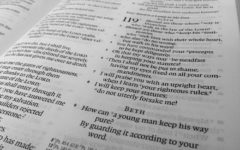
God’s Word is Our Guide for Life
God’s word guides us through all of life’s circumstances: 1) Affliction, 2) Worship, 3) Decisions, 4) Persecution, and 5) The Future. Each hearer should know that they can trust in God’s word to guide them.


God’s word guides us through all of life’s circumstances: 1) Affliction, 2) Worship, 3) Decisions, 4) Persecution, and 5) The Future. Each hearer should know that they can trust in God’s word to guide them.
In this lesson, we will look at some of Paul’s methods of evangelism. Each listener should be able to learn from Paul’s example of evangelism. I hope that we will follow Paul’s example and be more evangelistic.

In this lesson, we will look at why it is wrong to use instrumental music. That each listener would understand why we should not use instrumental music in worship because it is sinful.
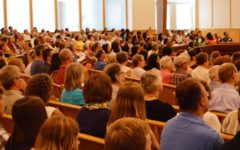
In 1 Corinthians 12-14, the apostle Paul addresses the abuse of miracles in the worship assembly. He concludes that section of teaching with this admonition: “Let all things be done decently and in order” (1 Corinthians 14:40).
The sacrifice of praise as recorded in Hebrews 13:15 is thankfulness.

In this sermon we will examine the statement, "To The Blind He Gives Sight." He does this because there is, 1) A Need--the blind need to see, 2) A Name--only He has this authority, 3) A Notion--the blind who see will tell others, 4) A Nation--the blind who see will believe and worship together, and 5) A Night--an eternal blindness is coming for those who do not see. I want to impress upon each hearer that God wants all men to be saved and to come to the truth and to help the congregation become more evangelistic.
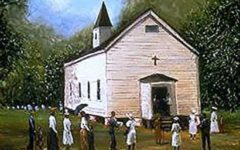
When we have a right attitude toward God, we will 1) Fear God, 2) Worship God, 3) Love God. The hearer should have a fundamental idea of what it means to be godly: have a right attitude toward God.
We meet once on Sunday because the Lord requires it (Acts 20:7). We meet twice because we are able and our elders want us to be edified further (Hebrews 10:25).

1 Corinthians 11:1-16 teaches God's authority structure through the Corinthian custom of the veil. The principle stands, but the veil is not binding on all churches.

Why remember Jesus (Luke 22:14-20)? 1) It Is the Apostles' Doctrine, 2) Grateful Hearts Remember, 3) The Father Wants It. Each person should remember Him weekly.

Psalm 119:1-8, the behavior of the blessed: 1) Blessed Conduct, 2) Binding Commands, 3) Bona Fide Commitment. Each person should become more familiar with Psalm 119.

Bible study is worship (Psalm 1:1-3): 1) Reciting God's Will, 2) Respecting His Word, 3) Retaining His Thoughts, 4) Retooling Our Lives. Each person worships in study.

During the Lord's Supper, we examine ourselves (1 Corinthians 11:27-29) and give thanks for Jesus and His blood shed for remission of sins (Matthew 26:28).

Principles in giving (1 Corinthians 16:1, 2): 1) Grace, God Gives, 2) Gratitude, Give Thankfully, 3) Generosity, Give Ourselves First. Each person should apply them.
Prayer is worship (Matthew 6:9-13): 1) Ascribing Glory to God, 2) Acknowledging Dependence, 3) Asking for Needs, 4) Accepting Blessings. Each person should pray so.
Our kids learned how to lead in the church at leadership camp this year. We give thanks to God and to our elders for sending them (1 Thessalonians 5:18).
Worshiping God in song (Colossians 3:15-17) involves 1) Beauty, 2) Doctrine, 3) Comprehension, 4) Attitude. Each person should understand proper worship in singing.
Why no instruments in worship? The New Testament church sang (Ephesians 5:19, Colossians 3:16), and we want to be like them. Faith comes by hearing God's word.
Is the church of Christ better than other churches? There is one body (Ephesians 4:4-6), the church of Christ. Churches that obey and follow Christ belong to Him.