
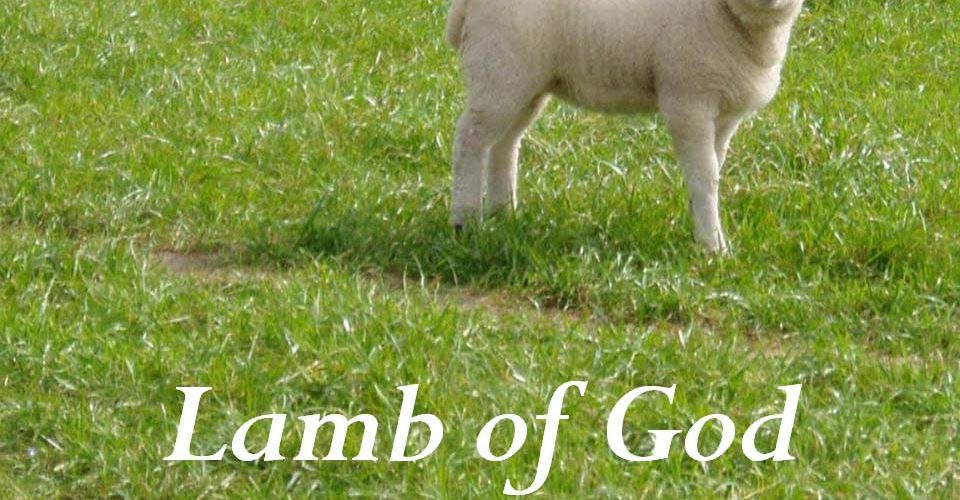
The Lamb of God
Podcast: Play in new window | Download
Subscribe: RSS
Click to expand the full transcript of “The Lamb of God”
It is a blessing to be here today. I’m very thankful for your presence this hour, and it is wonderful that we can gather together as God’s people, God’s church, on this first day of the week to worship and adore Him and sing praises to His name, to remember our Lord’s death and sacrifice in the Lord’s Supper, and to give our means to lift up prayers before Him and to honor Him with our words.
And then also, at this time, to study from His Word things that He has given us to consider and to understand. It’s a great blessing to be a member of the Lord’s Church today. Open your Bibles, if you would, to Exodus chapter 12. Exodus chapter 12. And we’re going to read verses 1 through 13. Exodus chapter 12 and verses 1 through 13.
And you may remember that in this context, Moses is in the midst of delivering the children of Israel out of Egyptian bondage. And starting in verse 1, we read these words, Now the Lord spoke to Moses and Aaron in the land of Egypt, saying, This month shall be your beginning of months. It shall be the first month of the year to you. Speak to all the congregation of Israel, saying, On the tenth of this month, on the tenth day, that is, Every man shall take for himself a lamb according to the house of his father, a lamb for a household. And if the household is too small for the lamb, let him and his neighbor next to his house take it according to the number of the persons, according to each man’s need. You shall make your count for the lamb.
Your lamb shall be without blemish, a male of the first year. You may take it from the sheep or from the goats. Now you shall keep it until the 14th day of the same month. Then the whole assembly of the congregation of Israel shall kill it at twilight. And they shall take some of the blood and put it on the two doorposts and on the lentil of the houses where they eat it.
Then they shall eat the flesh on that night, roasted in fire with unleavened bread and with bitter herbs. They shall eat it. Do not eat it raw, nor boiled at all with water, but roasted in fire, its head with its legs and its entrails. You shall let none of it remain until morning, and what remains of it until morning you shall burn with fire. And thus you shall eat it, with a belt on your waist, your sandals on your feet, and your staff in your hand. So you shall eat it in haste. It is the Lord’s Passover.
For I will pass through the land of Egypt on that night and will strike all the firstborn in the land of Egypt, both man and beast. And against all the gods of Egypt I will execute judgment. I am the Lord.
Now the blood shall be assigned for you on the houses where you are. And when I see the blood, I will pass over you. And the plague shall not be upon you to destroy you when I strike the land of Egypt.
The children of Israel had been in captivity for hundreds of years, and finally a deliverer had come. Nine plagues had been sent upon the land of Egypt. Blood, frogs, lice, flies, disease of cattle, boils, hail, locusts, darkness. And still Pharaoh refused to let the children of Israel go.
Well, the tenth plague was coming, and the Israelites needed to prepare for this time. And so on a spring day, Moses called the children of Israel together, the elders of the children of Israel together, and he gave them these instructions that we just read in Exodus 12, 1-13.
They were to take a male lamb in 10 days, and it was to be a spotless lamb. They were to separate it from the other livestock and to keep it for a period of four days. And then on the 14th day, they were to kill this lamb.
They were then to take a bunch of hyssop, a hyssop bunch or twigs, and dip them in the blood of the lamb and paint the lintel or the header of the doorposts with that blood. And they were to paint the sides of the door with that blood as well, the posts or the jams.
And then that night, God said, He would pass over Egypt. Those who had the blood on their lentil, the header, and on their doorposts, on the doorjams, they would be spared. But those who did not, the firstborn of that household would lose its life. You see, God said, when I see the blood, I will pass over you.
This was the lamb that God commanded the children of Israel to kill and to eat, the lamb of God. In John chapter 1 and verses 29 and then also in verse 36, approximately 1500 years later, we see that John the baptizer began his ministry. Most likely, this was in the springtime of the year when the waters of the Jordan River were flowing, when he could baptize there very strongly and very many people.
The mind of the people would have been turned to the Passover, whether it was soon to come or whether it was just recently celebrated. And with this context in mind, Jesus sees John coming to the Jordan River and He looks at him and He indicates to him and He says, Behold, the Lamb of God who takes away the sin of the world. You see, this image of the Passover was what the people had in mind when they would hear this reference to the Lamb of God.
And that’s what I would like for us to study this morning. In this lesson, we’ll compare and contrast the Passover Lamb with Jesus as God’s Lamb. And we’ll notice that the Lamb of God is four things. First of all, He is sanctified. He is God’s Lamb.
Secondly, He is spotless. He is without blemish. Third, He is a sacrifice, and He was given for us. And then finally, He is salvation for us today. The Lamb of God. I hope that each one will be able to understand the significance of both the Passover Lamb and the typical relationship of the Passover Lamb with Jesus Christ today.
Because as Paul tells us, Christ, in 1 Corinthians chapter 11, Christ, our Passover, is sacrificed for us. Let’s think about the Lamb of God being sanctified, first of all. The Lamb of God is sanctified. We’re all familiar with a stock show, perhaps, where you take your livestock and have them judged.
And the kids, you know, they work on these, especially those who are in the FFA. They work on these animals for months and months and maybe even years, raising them, tending them, and making sure they just look absolutely perfect when they take them to the show.
Well, that was the kind of offering that God expected from the children of Israel. The lamb that they were to take was to be sanctified. It was to be set aside. It was to be something that was separate from the others.
It was to be prepared. It was separated from the other animals, Exodus 12 and verse 5. They were to care for it for a period of four days. They were to have this sanctified, this set apart, this lamb that was separated from the rest. And they were to look after it for this period of time. And then it was to be given to God, wholly devoted and dedicated. You see, it was the Lord’s Passover, Exodus 12.
Chapter 12 and verse 11. Today, we consider Jesus as God’s dedicated Lamb. He is the chosen one. In fact, Peter tells us in 1 Peter chapter 2 and verse 4, “…to whom coming as unto a living stone, disallowed indeed of men, but chosen of God and precious.” Christ was chosen of God, just as those Passover lambs were chosen specifically.
And so also we see that God made a choice. You see, Jesus fully consecrated Himself to do God’s will. He said, For I came down from heaven not to do my own will, but the will of the Father, or the will of Him who sent me. John chapter 6 and verse 38.
And because He fully dedicated Himself to the sanctification of man, to making man holy and acceptable to the Lord, He is God’s dedicated Lamb. Notice Hebrews chapter 10 and verse 10. By the which will, that is by God’s will, we are sanctified through the offering of the body of Jesus Christ once and for all.
And so it was God’s will that Jesus be particularly picked, that He was chosen, and that He was that dedicated Passover Lamb, that dedicated one for us. The Lamb of God is, first of all, sanctified. But then secondly, the Lamb of God is spotless.
The Lamb was to be without blemish, a male of one year. It was to be absolutely flawless. We learn from Leviticus chapter 22 and verses 22 through 24 that this lamb was not to be blind, broken, maimed, crushed, bruised, scabbed, or having more than the normal amount of body parts. It was to be absolutely perfect and it was to be given to God. Jesus, of course, is that lamb who is without blemish and without spot. Consider Hebrews chapter 4 and verse 15.
For we have not a high priest which cannot be touched with the feeling of our infirmities, but was at all points tempted like as we are, yet without sin. And so Jesus never sinned. You see, in a moral way, just as that lamb was perfect and flawless in a physical way, Jesus was in a moral way perfect and flawless.
In Hebrews chapter 9 and verse 28 we read, “…So Christ was once offered to bear the sins of many, and unto them that look for Him shall He appear the second time,” notice, “…without sin unto salvation.” And so He is the one who is flawless and spotless, holy and harmless today. The Lamb of God is spotless.
But not only is the Lamb of God sanctified, not only is the Lamb of God spotless, but the Lamb of God is also a sacrifice. The children of Israel were commanded what to do with the Lamb. They were to kill the Lamb in their house as a sacrifice to God, Exodus chapter 12 and verse 6. They were then to roast the Lamb whole over fire, Exodus chapter 12 and verse 9. They were to gather around that table and they were to eat the Lamb, Exodus 12 and verse 8.
And whatever was left over, they were to burn with fire. You see, it was to be wholly consumed completely. There was to be nothing remaining of this sacrifice. Exodus 12 and verse 10. Jesus is our sacrifice today. Think of the ways in which He was wholly sacrificed. First of all, He sacrificed His station. Remember Philippians chapter 2 and verses 5 through 7.
Let this mind be in you, which was also in Christ Jesus, who, being in the form of God, thought it not robbery to be equal with God, but made Himself of no reputation, and took upon Himself the form of a servant, and was made in the likeness of men.
You see, He was equal to God in His station when He was in heaven. But He left that station, He came to earth, He took upon the form of a man, and He even went lower. He became in the form of a lowly servant. He sacrificed his station. But he also sacrificed his livelihood. He was a carpenter. He knew how to make things. His father had taught him the trade as being the firstborn in his house. He would have learned those things. But yet he gave that up. He said in Matthew 8 and verse 20, The foxes have holes and the birds of the air have nests, but the Son of Man hath not where to lay His head. He gave up all the creature comforts of life that we enjoy today so that He might be a sacrifice. And then He sacrificed His very life, laying it down on the cross so that we might have forgiveness of our sins.
In Hebrews chapter 7 and verse 26 and 27 we read, “…For such a high priest became us who is holy, harmless, undefiled, separate from sinners, and made higher than the heavens, who needeth not daily as those high priests who offer up sacrifice first for his own sins and then for the people’s.
For this he did once when he offered up himself.” The Lamb of God is a sacrifice. But then finally, the Lamb of God is salvation. Consider that the Lamb that was slain is salvation. God promised to kill all the firstborn in the land of Egypt. Exodus chapter 12 and verse 12. And there was only one way to prevent death from entering into the house. They had to take the blood of the Lamb and they had to put it on their doorways. Take that bunch of hyssop sticks, dip them in that blood and then Paint the header and paint the doorposts. They painted them with that blood so that when God passed over, He would pass over their house and would not afflict them with the plague. You see, God said this in Exodus 12, verse 13, when I see the blood, I will pass over you. Now, ask yourself some questions in this regard. Was the power to save in the door? Everybody had a door. Everybody had to walk in and out of the door.
Everyone had to put the blood on the door. Was the power to save in the door? Was the power to save in that bunch of hyssop twigs and sticks that they used to paint on the door? Was the power in the hyssop that applied the blood to the door? Was the power in the person who went out and took that hyssop sticks and dipped it in the blood and painted it over the door? Was the power in the person who did that work? No, the power wasn’t in any of these things.
God had already said what the power was in. You see, the power was in the blood. But if the blood was not applied, it would have done no good. They could have killed the lamb, roasted the lamb, ate the lamb, set aside the blood of the lamb. But if they hadn’t have taken the hyssop twigs and taken that blood and applied it to the header and the doorpost of that door, if someone hadn’t have done that, they would have lost the firstborn in their house.
The blood of the Lamb was salvation. Well, the blood of the Lamb is salvation today because Jesus is our salvation today. In Acts chapter 4 and verse 12, we read, In no other name is there salvation than in Jesus Christ. In Matthew chapter 26 and verse 28, Jesus said, For this is my blood of the New Testament, which is shed for many for the remission of sins. The blood that was shed.
You see, mankind’s sins merits eternal death. However, when God sees the blood of Christ, He will pass over us and grant us life. He will pass over the penalty that we earned because of our sins. Romans chapter 6 and verse 23, the wages of sin is death. And instead of granting death, He will grant life when He sees the blood.
How do we apply the blood of Christ to our life today? By being baptized into Christ. In Romans chapter 6, in verses 3 and 4, we read, Know ye not that so many of us, as were baptized into Christ Jesus, were baptized into His death? You see, it’s in His death where Christ shed His blood. And the power is in the blood.
And so, therefore we are buried with Him by baptism into death, that like as Christ was raised up from the dead by the glory of the Father, even so we should also walk in newness of life. Baptism brings us into the death of Christ where we can contact the blood. Jesus’ blood is the source of the power. Baptism is the application of that power.
And that’s why Peter says in Acts chapter 2, verse 38, that baptism is for the remission of sins. Just as the power was not in the doorway, the power was not in the hyssop brush, and the power was not in the man who applied the blood to the doorway, but the power was in the blood.
So also today, when we are baptized into Christ, the power is not in the water. The power is not in the person who does the baptizing. And the power is not even in the work of the one who is baptized. You see, the power is still in the blood. And because the power is in the blood, God will overlook. He will pass over those sins that we’ve committed. He will pronounce us, based upon the blood of Christ, forgiven. And we can then stand in a right relationship with Him. Turn with me, if you would, to Revelation chapter 5. Revelation chapter 5.
We see this image of God on His throne in heaven. And that’s chapter 4. And all the living creatures are standing around praising Him. Holy, holy, holy, verse 8. Lord God Almighty, who was and is and is to come. But in chapter 5, something happens. We read, Then I saw in the right hand of Him who sat on the throne a scroll written inside and on the back, sealed with seven seals.
Then I saw a strong angel proclaiming with a loud voice, Who is worthy to open the scroll and to loose its seals? And no one in heaven or on the earth or under the earth was able to open the scroll or to look at it. So I wept much, John writes, because no one was found worthy to open and read the scroll or to look at it.
But one of the elders said to me, Do not weep. Behold, the Lion of the tribe of Judah, the Root of David, has prevailed to open the scroll and to loose its seven seals. And I looked, and behold, in the midst of the throne and of the four living creatures and in the midst of the elders stood a lamb as though it had been slain, having seven horns and seven eyes, which are the seven spirits of God sent out unto all the earth. Then He came and took the scroll out of the right hand of Him who sat on the throne. Now when He had taken the scroll, the four living creatures and the twenty-four elders fell down before the Lamb, each having a harp and golden bowls full of incense, which are the prayers of the saints. And they sang a new song, saying, You are worthy to take the scroll and to open its seals, for you were slain and have redeemed us to God by your blood out of every tribe and tongue and people and nation, and have made us Kings and priests to our God, and we shall reign on the earth.
Then I looked, and I heard the voice of many angels around the throne, the living creatures and the elders, and the number of them was 10,000 times 10,000, and thousands of thousands saying with a loud voice, worthy is the Lamb who was slain to receive power and riches and wisdom and strength and honor and glory and blessing in every creature which is under heaven and every creature which is on the earth and every creature which is under the earth.
And such as are in the sea, and all that are in them I heard saying, Blessing, and honor, and glory, and power be to Him who sits on the throne, and to the Lamb, forever and ever. Then the four living creatures said, Amen. And the twenty-four elders fell down and worshiped Him who lives forever and ever.
Worthy is the Lamb. I said before you the Lamb of God this morning. He is God’s Lamb, sanctified. There is none other through whom you may have salvation today. He is a Lamb that is without blemish, spotless, and He has left for us a perfect example to follow in His steps.
He is the sacrificial Lamb. He has given all for us. Will you give your all for Him? And He is the Lamb of salvation. Will you receive the salvation that He offers today by putting Him on in baptism for the remission of sins?
If you are a Christian, but you have fallen away from the Lamb, then you have fallen away from the one thing that is worth anything in all of existence, and that is the Lamb of God. Worthy is the Lamb. Would you come back to Him this morning? If you’re not a Christian, then be obedient to His Gospel message. Hear it. Believe it. Repent of your sins. Confess Him and be baptized for the remission of your sins this very hour, and the power of the blood will wash away your sins.
So that you can be one with Him. Won’t you respond to the Lord’s invitation this morning? Respond to this great sacrifice that has been given for you through the Lamb of God while we stand and while we sing.
End of transcript. Thank you for reading along!
 Date written: August 2nd, 2002
SUBJECT: Christ
TITLE: The Lamb of God
PROPOSITION: In this lesson we will compare and contrast the Passover lamb with Jesus as the lamb of God. We will notice that the lamb is 1) Sanctified — God’s lamb, 2) Spotless — Without blemish, 3) A Sacrifice, 4) Salvation.
OBJECTIVE: Each hearer should be able to understanding the significance of the Passover lamb and the typical relationship to Jesus our Messiah, the Lamb of God today.
INTRODUCTION:
1. Background
2. Read Exodus 12:1-13.
1) After hundreds of years of captivity a deliverer had come.
2) 9 plagues had been sent upon the land of Egypt: blood, frogs, lice, flies, disease of cattle, boils, hail, locusts, darkness.
3) Pharaoh still refused to release them.
4) The 10th plague was coming and the Israelites needed to prepare.
5) On a spring day, Moses called for a meeting of the elders of the people.
6) In ten days they were to take a male lamb. Spotless. They were to separate it from the other livestock and keep it with them for four days and on the 14th day kill it.
7) They were then to take a bunch of hyssop and dip it in the blood of the lamb and paint the lintel/header and door posts/jambs with the blood.
8) That night God would pass over Egypt to take the life of the firstborn of every house. But when He saw the blood, he would pass over the houses of the children of Israel.
3. Read: John 1:29, 36
1) Approximately 1500 years later, John the Baptizer began his ministry.
2) Most likely, John began his ministry during the springtime in the beginning of the year when the water was flowing in the River Jordan.
3) The mind of the people would recently have been drawn to the passover.
4) With this context in mind, John points to Jesus and says, “Behold the Lamb of God which takes away the sin of the world.”
4. Ref. to S, T, P, O, and A.
DISCUSSION: The lamb of God is…
I. Sanctified
1. The lamb was to be consecrated/dedicated to God.
i. It was to be separated from the other animals (Exodus 12:5).
ii. They were to care for it for four days (Exodus 12:3, 6).
iii. It was to be given to God; it was the Lord’s Passover (Exodus 12:11).
2. Why is Jesus God’s dedicated Lamb?
i. Because He is the one chosen of God – 1 Peter 2:4 Peter says of Jesus “To whom coming, as unto a living stone, disallowed indeed of men, but chosen of God, and precious….”
ii. Because He fully consecrated himself to doing God’s will. He said “For I came down from heaven, not to do mine own will, but the will of him that sent me.” (John 6:38)
iii. Because He fully dedicated himself to the sanctification of man. Hebrews 10:10 “By the which will we are sanctified through the offering of the body of Jesus Christ once for all.”
II. Spotless
1. The lamb was to be without blemish.
i. A male of one year, flawless.
ii. We learn from Leviticus 22:22-24 that it was not to be blind, broken, maimed, crushed, bruised, scabbed, or having more than the normal amount of body parts.
2. Jesus is the Lamb without blemish or spot.
i. He knew no sin. Heb.4:15 “For we have not an high priest which cannot be touched with the feeling of our infirmities; but was in all points tempted like as we are, yet without sin.”
ii. Because he knew no sin, he can bear the sins of mankind. “So Christ was once offered to bear the sins of many; and unto them that look for him shall he appear the second time without sin unto salvation.” (Heb.9:28).
III. A Sacrifice
1. The children of Israel were commanded what to do with the lamb.
i. Kill the lamb in their house as a sacrifice to God (Exodus 12:6).
ii. Roast the lamb whole over fire (Exodus 12:9).
iii. Eat the lamb (Exodus 12:8).
iv. Burn whatever was left and leave nothing (Exodus 12:10).
2. Jesus is our perfect sacrifice today.
i. He sacrificed His station. Phil.2:5-7 “Let this mind be in you, which was also in Christ Jesus: Who, being in the form of God, thought it not robbery to be equal with God: But made himself of no reputation, and took upon him the form of a servant, and was made in the likeness of men:”
ii. He sacrificed His livelihood. “And Jesus saith unto him, The foxes have holes, and the birds of the air have nests; but the Son of man hath not where to lay his head.” (Matt.8:20).
iii. He sacrificed His very life. Hebrews 7:26, 27 “For such an high priest became us, who is holy, harmless, undefiled, separate from sinners, and made higher than the heavens; Who needeth not daily, as those high priests, to offer up sacrifice, first for his own sins, and then for the people’s: for this he did once, when he offered up himself.”
iv. “For even Christ our passover is sacrificed for us” (1 Cor.5:7).
IV. Salvation
1. The lamb that was slain provided salvation.
i. God promised to kill all the first born in Egypt (Exodus 12:12).
ii. There was only one way to prevent death from entering the house.
iii. They had to take the blood of the lamb and put it on their doorways (Exodus 12:7).
iv. God said, “when I see the blood, I will pass over you.” (Exodus 12:13).
1) Was the power to save in the door?
2) Was the power to save in the hyssop brush that put the blood on the door?
3) Was the power to save in the man’s work of applying the blood to the door?
4) The power was in the blood, but if not applied, then it would have done no good.
v. Death visited every house upon which the blood was not applied.
2. Jesus is salvation today!
i. Acts 4:12 — In no other name is there salvation.
ii. The power of Jesus salvation today is in His blood. Jesus said, “For this is my blood of the new testament, which is shed for many for the remission of sins” (Matthew 26:28).
iii. The sin of mankind merits eternal death.
iv. However, when God sees Christ’s blood He will pass over us and grant us LIFE!
3. The blood did not cover them if they did not apply it; it will not cover us if we do not apply it.
i. How do we apply the blood today?
ii. We apply the blood of Christ to our life through baptism into Christ.
iii. Romans 6:3-4 “Know ye not, that so many of us as were baptized into Jesus Christ were baptized into his death? Therefore we are buried with him by baptism into death: that like as Christ was raised up from the dead by the glory of the Father, even so we also should walk in newness of life.”
iv. Jesus shed His blood in His death; baptism brings us into the death of Christ where we can contact that blood.
v. Jesus’ blood is the source of the power; baptism is the application of that power.
vi. That is why Acts 2:38 says that baptism is for the remission of sins.
vii. Just as the power of salvation was not in that doorway, the hyssop bunch, or the one who painted the blood on the door for the Israelites so also the power of salvation is not in the water, baptistery, or preacher.
viii. The power is in the blood.
CONCLUSION:
1. Read Revelation 5 – Worthy Is the Lamb!
2. The Lamb of God stands before you this very morning.
i. He is God’s Lamb, sanctified – there is no other through whom you may come for salvation. Acts 4:12
ii. He is the Lamb without blemish, spotless – He has left for us a perfect example.
iii. He is the Sacrificial Lamb – He has given His all for us; will you give your all for Him?
iv. He is the Lamb of Salvation – Will you receive the salvation that he offers today by applying the blood to your life?
3. Invitation
i. If you are a Christian but have fallen away
1) If you sin willfully, there remains no more sacrifice for your sin (Hebrews 10:26).
2) Repent and bring the Lamb of God back into your life.
ii. If you are not a Christian this morning . . .
1) The Lamb of God was slain for you to bring you out of sin and into salvation!
2) Paul declared, “Christ, our Passover, is sacrificed for us.” (1 Corinthians 5:7)
3) Oh will you not come to the blood of the Lamb this very hour?