
Honoring our Mothers
May God bless our mothers, and may our mothers be godly.


May God bless our mothers, and may our mothers be godly.

The point is this: the assumption of restoration does not necessarily imply non existence of that which needs to be restored as the question seems to imply. We recognize that restoration means that that which needs to be restored has deteriorated badly. In what sense? In the sense that not very much of the original is left. But that means that SOME of the original is still there. How can it be restored? By following the pattern for the original. In the case of the church, where do we find that pattern? In the New Testament.
When the reformers, who eventually ended up creating the Protestant movement, withdrew from the Catholic church, they also renounced Catholic tradition as a source of authority for religious practices. In its place, they demanded that things be settled "sola scriptura" with scripture only.

We praise the Maker of our mothers because He made our mothers to be 1) Kind, 2) Compassionate, and 3) Caring. Each listener should be able to understand why God made mothers and the importance of their role within the home.

As we were running, I matched his pace, talked to him about the run, and encouraged him to keep going; we had great conversation and fellowship. As we were running, walking, talking, and enjoying our time together, I realized that our run illustrated the concept of the Greek word parakletos.
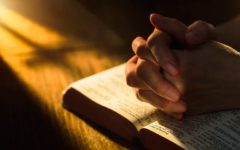
In this lesson, we will look at what it means to be a friend of God. One is God's friend when he 1) Loves God with all his heart, soul, and mind, 2) Does what God wants him to do simply because God has asked us to do it, 3) Tells others about what a great friend God is. Each hearer should be able to understand what it takes to be a friend of God. I want everyone to be motivated to make God their friend.
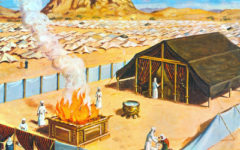
Jesus died on the cross as the perfect sacrifice for sin because 1) Justice Demands Payment 2) Old Testament Sacrifices were Insufficient, 3) A Perfect Sacrifice Was Needed. This lesson explains why we need a perfect sacrifice and why Jesus was the perfect sacrifice.

What we desire of others reveals our expectations of them and our high opinion of ourselves.
The spiritual narcissist judges others to feel righteous while ignoring his own sins. Jesus says to first take the log out of your own eye (Matthew 7:1-5).
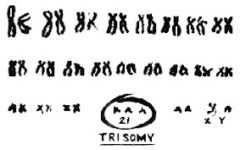
There is much we can learn from a person with Down Syndrome.
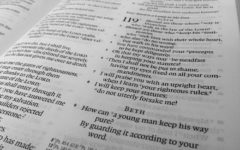
We will study Psalm 119:89-96: God is faithful to save His saints because 1) He is Dependable, 2) His Saints Delight in His Word, and 3) He Delivers from the Enemy. We study to gain more familiarity with Psalm 119 and the wonderful word of God and to understand how God saves His saints through His faithfulness and theirs.
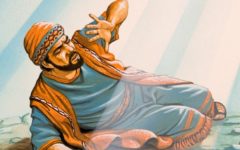
In the conversion of Saul we see 1) Confrontation, 2) Contrition, 3) Concern, and 4) Conversion. The objective of this study is to understand the conversion of Saul so that we may explain it to others. Saul's conversion serves as a model for everyone's conversion.
Graham said that some people are just born Christians, no conversion necessary.

To have the right attitude in prayer we must ask in 1) Faith, 2) Thanksgiving, 3) Constancy. Each person should understand these prerequisites to prayer and why they are prerequisites. The aim of this lesson is to stir up remembrance, exhort, and encourage all to pray more fervently, more thankfully, and constantly.

In this lesson, we will look at why it is wrong to use instrumental music. That each listener would understand why we should not use instrumental music in worship because it is sinful.

Christians ought to respond when a member of Christ’s body is harmed. Will we take care of one another?
An audio sermon on 2 Corinthians 10-13, where Paul defends his apostleship and speaks of strength in weakness. The post contains the text of these four chapters.

In this lesson, we will study why Jesus died on the cross. To understand that Jesus brings unity to mankind in the church, we must understand God’s original design in the creation. When we understand this, we will understand that Jesus died on the cross to restore unity between God and man, and between man and man. Each member should understand that Jesus died on the cross to bring unity in the church as the restoration of His purposes in creation.

This is an emotional phenomenon known as attachment: when we identify with it to the point of ownership. We take everything said or done about the subject “personally.”
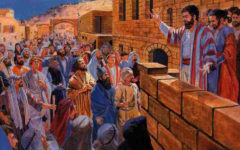
An audio sermon on three questions answered in Acts 2 on the day of Pentecost, when three thousand were baptized. The post contains the full text of Acts chapter 2.