
The Christian and Sinful Offenses
Jesus teaches the Christian what to do about offenses in relationship to 1) the World, 2) One’s Self, 3) Other Christians. The hearer will know how Jesus expects us to handle offenses.


Jesus teaches the Christian what to do about offenses in relationship to 1) the World, 2) One’s Self, 3) Other Christians. The hearer will know how Jesus expects us to handle offenses.

Jesus’ escape from the tomb means 1) the Reality of God, 2) the Reality of Redemption for Sinners, 3) the Reality of Resurrection for Saints. The hearer should understand that Jesus’ resurrection presents to us God’s reality when it comes to God, Redemption, and Eternity. This sermon to communicate that the resurrection of Jesus presents God’s perspective of the reality as it really is.

Jesus did not establish a denomination (2 John 9). A move toward nondenominational Christianity is right, because one church is not just as good as another.

Jesus was and is Deity. In Him dwelt all the fullness of the godhead bodily according to Colossians 2:9. The relationship he sustained to the Father was so close that He could say when Phillip asked Him to show the Father, "Have I been so long time with you, and yet hast thou not known me, Philip? He that hath seen me hath seen the Father; and how sayest thou then, Shew us the Father? Believest thou not that I am in the Father, and the Father in me? The words that I speak unto you I speak not of myself: but the Father that dwelleth in me, he doeth the works. Believe me that I am in the Father, and the Father in me: or else believe me for the very works’ sake" (John 14:9-11).

What is heaven and hell? The Bible tells us that 1) Heaven is a place of reward, but hell is a place of punishment. 2) Heaven is a place of eternal joy; Hell is a place of suffering. 3) Heaven is God’s home; Hell is where Satan’s prison. Each hearer should understand how the Bible describes heaven and hell. This sermon should motivate the hearers to want to go to heaven and avoid hell.

Aaron and the others were made the drink the water as a punishment for their sin. So, yes, Aaron was punished for this sin.

During the holidays, give something that lasts. Lay up treasures in heaven (Matthew 6:19-21) by giving people the words of Jesus, who is the same forever.

An athlete is not crowned unless he competes lawfully (2 Timothy 2:5). To receive the crown of righteousness, we must live by God's standard, not cheat.

We should give thanks for the goodness of God because God 1) Fills the Hungry Soul with Goodness, 2) Breaks the Chains of Sin 3) Delivers from our Own Destruction, 4) Guides us to our Desired Haven 5) Gives Fertility to the Land and 6) Executes Justice. Each hearer should understand that God does many very good things in the world on a daily basis. This sermon emphasizes God’s faithful goodness to mankind.

Christians are to give thanks always for all things (Ephesians 5:20). There is not a single thing, not even our troubles, for which we cannot be thankful.

In this lesson, we will look at Romans chapter one, which is 1) God’s righteousness and 2) Man’s unrighteousness. Each hearer will understand that God’s righteousness is revealed through the gospel of His Son, Jesus Christ and that man is inherently unrighteous. I hope to communicate that God’s righteousness saves but man’s unrighteousness condemns.

What does it mean to love my neighbor as myself? How do I practice it? Where do I start? Each person should understand more about the second command and how to live it. This sermon encourages everyone to practice the second greatest command.

Fire ants are pests, but they are diligent (Proverbs 6:6-8). They work together, stay consistent, and sacrifice. We should do the same in taking the gospel to the world.
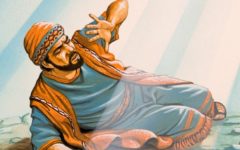
The apostle Paul escaped 1) Stoning, 2) Imprisonment, 3) Shipwreck. Each hearer should understand that God can and will deliver in time of trouble. We should put more faith and trust in God than our own fears.

In this psalm, we see a prayer of one afflicted. It is a prayer of 1) Mercy, 2) Deliverance, 3) Grief, and 4) Received. Each hearer will understand that God hears the prayers of the afflicted. I wish to communicate that God hears even when we feel abandoned.

The Bible begins, "In the beginning God created the heavens and the earth" (Genesis 1:1). The universe had a beginning, and the only rational explanation for it is God.

The scriptures teach plainly that Christ went to paradise after His death. In Luke 23:43 we read these words: "And Jesus said unto him, Verily I say unto thee, Today shalt thou be with me in paradise." Jesus clearly told the thief on the cross that he would be with Him in paradise. One thing we know from the scriptures to be true is that paradise is not hell, and neither is hell paradise.

Verse 26 of Romans 11 is the conclusion to the allegory. Paul says, "And SO all Israel shall be saved." Paul doesn't say, "all Israel shall be saved," but "SO all Israel shall be saved." The word "so" is an adverb of manner. It means in such a way, or in such a manner, all Israel shall be saved. The idea is that they will be saved in the same manner in which they are grafted back into the Olive Tree, through belief that Jesus is the Messiah.

What is the gospel? It is 1) the Good News, 2) the Death, Burial, and Resurrection of Jesus, 3) the Power of God to Salvation. Each hearer will be able to answer the question, “What is the gospel?” I want to communicate that the gospel is God’s plan for salvation through Jesus Christ.

God called Israel His special treasure (Exodus 19:5), and through Jesus, Christians are His own special people (Titus 2:14). God values you above everything else.