In Revelation 1, we see that Jesus is the 1) Revelator, 2) Uniter, 3) Motivator, and 4) Initiator. In this lesson, we will study what Revelation chapter one says about who Jesus is. Each hearer will know more about who Jesus is.
In this lesson, we will look at some of Paul’s methods of evangelism. Each listener should be able to learn from Paul’s example of evangelism. I hope that we will follow Paul’s example and be more evangelistic.
Jesus died on the cross because God loved the world enough to sacrifice His own Son for the world’s salvation. Each listener should be able to explain how God’s love motivated Him to sacrifice His Son, Jesus. Jesus died on the cross because 1) God is a God of Love, 2) The World Needed True Love, 3) The Son Demonstrated that Love. I hope that the listener would understand God’s motives in sending His Son to die on the cross.
In this study, we will look at different kinds of risks that Christians must take to be Christians. There is the risk of 1) Leaving the ones we love, 2) financial loss, 3) our life and health, 4) public rejection and failure. Each Christian should know what kind of risks he or she faces each day in living the Christian life and be prepared to handle those risks understanding that while there may be "risks" while we are upon the earth, the outcome is guaranteed. I want to spur the brethren on toward taking more risks in these areas because the greater risk one takes the greater reward that is associated with the risk.
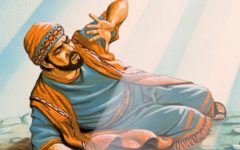
In the conversion of Saul we see 1) Confrontation, 2) Contrition, 3) Concern, and 4) Conversion. The objective of this study is to understand the conversion of Saul so that we may explain it to others. Saul's conversion serves as a model for everyone's conversion.
In this lesson, we will look at why it is wrong to use instrumental music. That each listener would understand why we should not use instrumental music in worship because it is sinful.
This sermon outline is about church growth. The church grows through 1) Change, 2) Humility, 3) Security. The objective of this lesson is to understand these basic principles of church growth and embrace them.
An audio sermon on 2 Corinthians 1-2, where Paul speaks of the God of all comfort and forgiving the repentant brother. The post contains the text of both chapters.
In this lesson we will briefly look at the Asian church of Laodicea. We will note: 1) Some facts regarding the city, 2) Some facts regarding the church at Laodicea, 3) Jesus' message to the church at Laodicea. Each should be able to discuss Revelation 3:14-22 in its historical and spiritual context. To increase awareness of the church at Laodicea and the lessons we can learn from her mistakes.
In this sermon we will examine the statement, "To The Blind He Gives Sight." He does this because there is, 1) A Need--the blind need to see, 2) A Name--only He has this authority, 3) A Notion--the blind who see will tell others, 4) A Nation--the blind who see will believe and worship together, and 5) A Night--an eternal blindness is coming for those who do not see. I want to impress upon each hearer that God wants all men to be saved and to come to the truth and to help the congregation become more evangelistic.
Fear comes from 1) Lack of Knowledge, 2) Lack of Love, and 3) Lack of Faith. That we may be able to overcome our fears and live in love, peace, and fellowship with one another.
Evangelism and the great commission (Matthew 28:18-20): 1) The Plan of Salvation, 2) Its Scope, 3) Its People, 4) Its Results. Each person should give a brief synopsis.
When sharing the gospel, say "come and see" (John 1:43-46): 1) The Works of God, 2) The Glory of God, 3) The Son of God. Each person will have something to say.