
Wrestling with Salvation by Faith
In this lesson, we will see that the Bible teaches salvation by faith, but not faith only. Each person should have ample evidence from the scriptures that show salvation is not by faith only.


In this lesson, we will see that the Bible teaches salvation by faith, but not faith only. Each person should have ample evidence from the scriptures that show salvation is not by faith only.
This lesson examines three attitudes which one can have toward Jesus. Each person would accept the Jesus as Christ-both his humanity and divinity. I hope to focus attention on Jesus and His identity as God and man.

We will study Luke 7:36-50 and see that 1) Jesus responds to all invitations in some way, 2) Jesus chose to see the good in people first, not the bad, 3) Jesus sees and knows real sacrifice, 4) Jesus rewards faith in Him. In this lesson we want to understand how Jesus looks at people so that we can see them the way He does.

The Bible begins, "In the beginning God created the heavens and the earth" (Genesis 1:1). The universe had a beginning, and the only rational explanation for it is God.

Like heat that is useful when directed well, fiery trials test and refine us. Genuine faith is more precious than gold (1 Peter 1:7). Has our faith held up?

A survey found 52 percent of Americans do not believe Jesus is God. Righteousness exalts a nation (Proverbs 14:34), and we can still choose to follow Jesus.

God is invisible on purpose (1 Timothy 1:17). He calls us to walk by faith in what we cannot see. Will we trust the visible self or the invisible God (Matthew 16:24-25)?

God does not change (Malachi 3:6), but as we grow spiritually (2 Peter 3:18), we find Him bigger. In times of testing we learn how big our God really is.

God is the Father of All because 1) He created All in His Image, 2) He gave His Son for the All the World, 3) He Treats All Without Partiality. The hearer should understand that no one is excluded from a relationship with God. The only barrier is whether we want one or not. The point of this sermon is to remind Christians that God wants everyone in His body, the church.
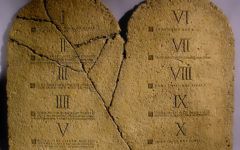
Christianity is a religion of the heart. God writes His laws on our hearts (Hebrews 8:10), and no one else enforces them. To be a faithful Christian, the choice is yours.

We walk by faith, not by sight (2 Corinthians 5:7), and faith comes by hearing God's word (Romans 10:17). We must have a word from God to please Him.

In this lesson, we will notice four lessons about faith from the Bible. Each hearer should be able to state the four point regarding Bible faith. This lesson is designed to increase each person’s knowledge of Bible faith and what the Bible says about faith.
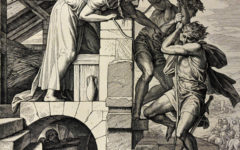
Escaping from Jericho meant 1) Escape for the Spies, 2) Escape for Rahab and her family, and 3) Escape from the Consequences of Sin. In this lesson, we will study the escape of the two spies and Rahab, and learn how we can escape from the consequences of sin through Jesus.

There are many things that a person may do in this life, but don’t mess around with these.

Are human beings even less than a speck and insignificant in the cosmos? This is exactly what atheistic evolutionists want us to believe. Their philosophy of the absolute materiality of everything implies that human beings are next to nothing.

It matters what we believe because 1) Beliefs Produce Actions, 2) Actions Result in Consequences, 3) Happiness Results. Each should be concerned with believing the right things and understanding how not believing the right things is detrimental to our spiritual welfare.

All the scriptures are profitable for me. However, we don’t appeal to the Old Testament to determine forms of worship, the organization of the church, or the plan of salvation. However, the Old Testament can supply us information on correct attitudes, wisdom, teach us concerning faith, and provide a great deal of background information regarding the New Testament.

People have long sought to justify their desires to pursue a life of pleasure and invented many rationalizations along the way. One of these rationalizations is the doctrine of salvation by faith only. It is one of the greatest lies repeated today.

This lesson will discuss the three reasons the Hebrew writer gives for running the Christian race in Hebrews 12:1-11. This lesson is designed to encourage to brethren to run the race with patience.
Paul does not say there was no law in the day of Abraham or even before that. That is not his point at all. He merely says that where there is no law then there is no transgression. What then is the point? His point is that when God gave the promise to Abraham, that promise was given without law. Hence that promise was made to Abraham upon the condition of faith, not upon the condition of law.