

The Wisdom of Jesus
Podcast: Play in new window | Download
Subscribe: RSS
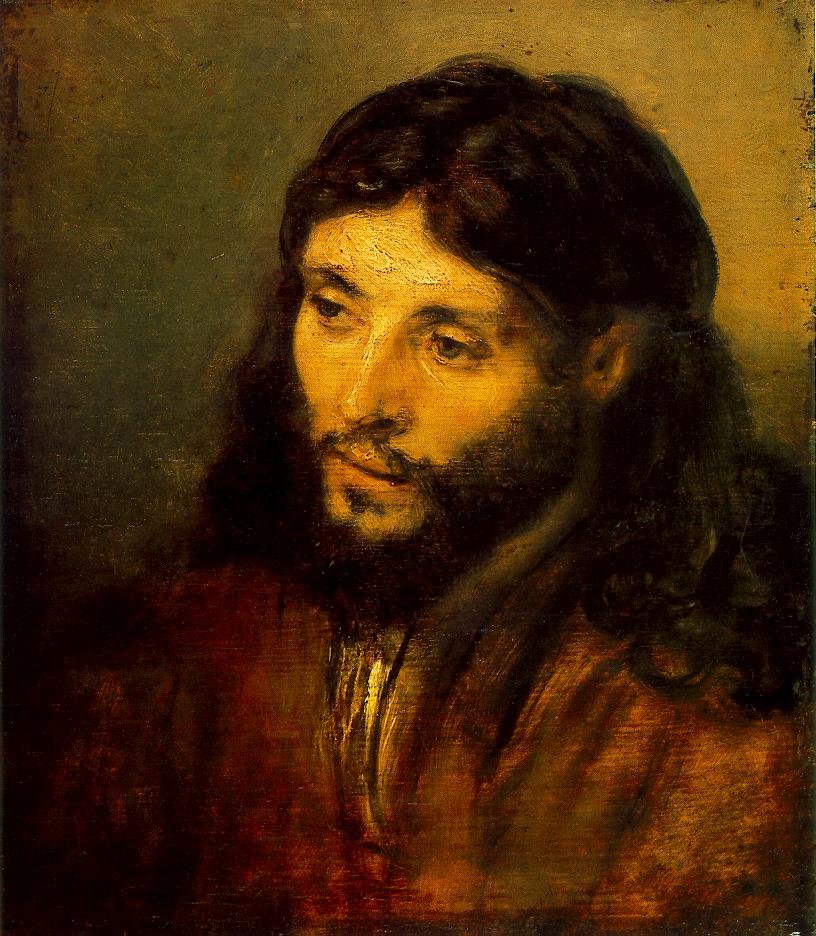 TITLE: The Wisdom of Jesus
SUBJECT: Life of Christ
PROPOSITION: In this lesson we will study John 8:1-11 and learn about the wisdom of Jesus: 1) Undergoing a Dilemma, 2) Uncompromising Deliberation, 3) Upholding Dignity.
OBJECTIVE: To study the passage and learn lessons from the text.
AIM: That each understand the appropriate lessons to be learned from this text.
INTRODUCTION:
1. Read: John 8:2-11
2. About the Text:
1) The story of the woman taken in adultery is one with which our society is familiar.
2) Many use the passage to say that no one should condemn sin.
3) The passage doesn’t teach this.
4) It teaches us about the wisdom of Jesus.
3. Ref. to S, T, P, O, and A.
DISCUSSION: The wisdom of Jesus . . .
I. Undergoing A Dilemma (John 8:2-5)
1. On the surface . . .
1) Jesus was in the temple teaching the people.
2) The Pharisees bring in a woman.
3) They place her in the middle of the multitude where Jesus is teaching.
4) They say she was taken in adultery and ask what Jesus’ instructions are concerning her.
5) Jesus stoops down and writes on the ground appearing to ignore them.
2. Under the surface . . .
1) The Pharisees are using this woman to temp or test Jesus.
2) They are seeking to place Jesus in a dilemma.
3) On the one hand, Jesus ministry was characterized by love and mercy toward sinners.
4) He was called a “friend of sinners” (Matthew 11:19).
5) On the other hand, Jesus said that he did not come to destroy the law (Matthew 5:17).
6) If that was true, then he ought to condemn this woman to death as that is what the law prescribed (Leviticus 20:10, Deuteronomy 22:22).
7) So, if Jesus condemned the woman, he contradicted his own ministry of love and mercy; if he excused her he contradicted the law.
3. The wisdom of Jesus avoided hypocrisy…
1) He knew the scribes and Pharisees were hypocrites (Matthew 23).
2) Jesus condemned hypocritical judgment in Matthew 7:1-5.
3) “He answered and said to them, “Well did Isaiah prophesy of you hypocrites, as it is written: ‘This people honors Me with their lips, But their heart is far from Me.” (Mark 7:6).
II. Uncompromising Deliberation (John 8:6-8)
1. On the surface . . .
1) Jesus began writing on the ground.
2) The Pharisees demand that Jesus pass sentence on this woman.
3) Jesus then responded, “He that is without sin among you, let him cast the first stone.”
4) Jesus returned to writing on the ground.
2. Under the surface . . .
1) What was Jesus doing writing on the ground?
a. Some Greek texts use the word καταγράφω (katagrapho).
b. The more commonly used word for “write” in Greek is γράφω grapho.
c. This word may indicate a writing of judgment.
d. An Armenian translation of this passage says that Jesus was writing the sins of the Pharisees in the sand.
e. That would be consistent with the use of the word καταγράφω (katagrapho).
f. It would also be consistent with the implications of Jesus’ statement.
g. However, we don’t know for certain what Jesus was writing.
2) What do we understand from what Jesus said?
a. First, we must understand that the Old Testament required two or three witnesses in order for someone to be put to death (Deuteronomy 17:6, 19:5).
b. Second, we must ask a question: Under the Old Testament, who was obligated to cast the first stone?
c. Deuteronomy 17:7 states, “The hands of the witnesses shall be first upon him to put him to death, and afterward the hands of all the people. So thou shalt put the evil away from among you.”
d. Third, the law also prescribed that the man be put to death as well (Leviticus 20:10, Deuteronomy 22:22). Where was he?
e. So, Jesus was able to uphold the law because he said, “Cast the first stone.”
f. The catch, however, was that the witnesses had to come forward and then they would have to testify who the man was also.
g. He then would also be required to be put to death.
h. He was likely among them as this whole situation was a “set up.”
3. The wisdom of Jesus…
1) Jesus pointed them to God’s word.
2) Jesus’ words will judge (John 12:48).
III. Upholding Dignity (John 8:9-11)
1. On the surface . . .
3) The woman’s accusers began to file out from the oldest to the youngest.
4) Some Greek texts say that they were condemned by their consciences.
5) Eventually only Jesus and the woman are left.
6) Jesus then asked the woman, “Where are they? Did no man condemn you?”
7) She answered “No one.”
8) Jesus, without witnesses to put someone to death according to the provisions of the law, neither condemned her to death.
9) Jesus told her to “Go and sin no more.”
4. Under the surface . . .
1) The Pharisees filed out from the oldest to the youngest because the oldest knew the law and what else would be required in this situation.
2) The youngest, no longer having the support of their elders, refused to take matters into their own hands.
3) When Jesus asked the woman if no man condemned her, he was asking if no one had thrown a stone at her to condemn her to death.
4) That is also what Jesus meant when he said he wasn’t going to condemn her. That is, he wasn’t going to stone her without the necessary witnesses.
5) However, he did not let her off without rebuke.
6) He told her not to sin further acknowledging the fact that she had committed adultery and was guilty of sin.
7) The woman did not ask for forgiveness and Jesus did not extend forgiveness.
8) However, he did offer her a second chance to do what was right with her life.
4. The wisdom of Jesus …
1) Jesus didn’t come to be an executioner (John 3:17 “For God sent not his Son into the world to condemn the world; but that the world through him might be saved.”).
2) He respected a person’s dignity.
a. Every single person has worth before God (John 3:16).
b. Even the most base of sinners may repent and receive God’s forgiveness (1 Timothy 1:15-16).
c. It is not our prerogative to simply deal with people as disposable pawns.
d. People are important to God and they must be important to us as well.
2) Jesus gave her a second chance to be forgiven of sin.
a. Jesus was full of grace and truth (John 1:14-17).
b. He gave this woman a second chance.
c. God offers us second chances every day.
CONCLUSION:
1. The wisdom of Jesus . . .
1) Undergoing a Dilemma
2) Uncompromising Deliberation
3) Upholding Dignity
2. Invitation
1) For those who are not saved, His forgiveness is available today.
a. Today is the day of salvation (2 Corinthians 6:2).
b. You can make all things new right now (2 Corinthians 5:17).
2) For Christians who have sinned, prayer is available.
a. James 5:16
b. 1 John 1:9
3) We have a whole life of opportunity to change and do what is right.