When you quench a fire, you put out the fire. When you quench your thirst, your thirst goes away. The word “spirit” here could refer to the Holy Spirit, or one’s own personal spirit. Either way, spirit is the source of all things spiritual. So the basic meaning of the command is not to put out the source of all things spiritual.
So usually when we read about the kingdom in the New Testament, it has reference to the church and vice versa. However, there are a couple of passages where the term kingdom doesn’t refer to the church, but to heaven.
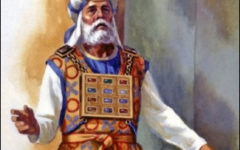
Who or what is a high priest? A mediator between God and man. From Melchizedek (Genesis 14:18) to Aaron's line, the office points to Jesus, our perfect High Priest.
Are the wicked annihilated? No. "Destroy" in Matthew 10:28 does not mean cease to exist. For God to be just, hell must be unending conscious torment. Repent today.
Does God hear the prayer of sinners (John 9:31)? There is a barrier between the sinner and God, though He providentially helps seekers find the truth (Acts 17:27).
The thief on the cross was saved under a different covenant. Under the New Covenant, God requires baptism for the remission of sins (Acts 2:38, 1 Peter 3:21).
What is the opposite of grace? Not justice, but unrighteous vengeance. Grace is God's favor through Jesus (John 1:14-17). It is better to show grace than get even.
Is the King James Version the only authorized version? No. Authority lies in God's inspired original texts, and translations are authoritative as they reflect them.
All preaching is about Jesus (1 Corinthians 2:2) in three ways: teaching the lost to be saved, teaching the saved to stay faithful, and doing good works to glorify God.
Are there degrees of punishment in hell? Yes, some will suffer more than others (Luke 12:47, 48), but even the least suffering in hell would be unthinkable.
We meet once on Sunday because the Lord requires it (Acts 20:7). We meet twice because we are able and our elders want us to be edified further (Hebrews 10:25).
1 Corinthians 11:1-16 teaches God's authority structure through the Corinthian custom of the veil. The principle stands, but the veil is not binding on all churches.
Mark 9:40 and Matthew 12:30 do not conflict. One man was not physically with Jesus yet worked for Him; the Pharisees were with Him but spiritually against Him.
In Philippians 2:10, "those under the earth" are people who have died and been buried. All will bow before Jesus, so let's obey Him now and not be condemned.
Jesus gave the seventy-two power over demons for their mission (Luke 10), but told them to rejoice that their names are written in heaven. That is our emphasis too.
Is cheating wrong? Yes. The Bible forbids cheating your neighbor (Leviticus 19:13). Christians must provide honorable things in the sight of all (2 Corinthians 8:21).
Blasphemy against the Holy Spirit (Luke 12:10) was the Pharisees' charge that Jesus cast out demons by Satan. It describes hearts so hardened they will not repent.
The widow's two mites (Mark 12:41-44) show that the quality of giving matters more than the amount. Like the rich young ruler, we must trust God, not our riches.