
Speaking in Tongues
Podcast: Play in new window | Download
Subscribe: RSS
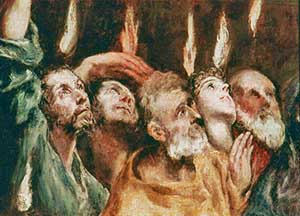 TITLE: Speaking in Tongues
SUBJECT: Bible Miracles
PROPOSITION: This lesson will look at questions regarding speaking in tongues, 1) What was speaking in tongues? 2) Who could speak in tongues? 3) When and Where did they speak in tongues, and 4) Why did they speak in tongues?
OBJECTIVE: Each hearer should be able to explain what speaking in tongues was and their purpose.
AIM: This lesson seeks to disabuse the notion that speaking in tongues is something unintelligible and contemporary.
INTRODUCTION:
1. Read: Acts 2:1-4
2. About the Text:
1) Many claim to speak in tongues today just like the apostles did.
2) Those who do so today speak in a way that is unintelligible to those hearing.
3) It is often accompanied with an emotional display of behavior.
4) What does the Bible have to say about speaking in tongues?
3. Ref. to S, T, P, O, and A.
DISCUSSION:
I. What was speaking in tongues?
1. Speaking in tongues was a miraculous ability that Jesus promised to the disciples.
1) “And these signs will follow those who believe: In My name they will cast out demons; they will speak with new tongues” (Mark 16:17).
2) “And they were all filled with the Holy Spirit and began to speak with other tongues, as the Spirit gave them utterance” (Acts 2:4).
2. Speaking in tongues was speaking in a real language that could be understood by some.
1) “Then they were all amazed and marveled, saying to one another, ‘Look, are not all these who speak Galileans? And how is it that we hear, each in our own language in which we were born?’” (Acts 2:7-8).
2) “We hear them speaking in our own tongues (languages) the wonderful works of God” (Acts 2:11).
a. The miracle was in the person speaking, not the hearer who was an unbeliever.
b. They were human languages that were understood by those present.
3) “There are, it may be, so many kinds of languages in the world, and none of them is without significance. Therefore, if I do not know the meaning of the language, I shall be a foreigner to him who speaks, and he who speaks will be a foreigner to me” (1 Corinthians 14:10-11).
4) The person who spoke in tongues understood this language because he was edified. “He who speaks in a tongue edifies himself, but he who prophesies edifies the church” (1 Corinthians 14:4).
3. Speaking in tongues was a gift of the Holy Spirit.
1) “And they were all filled with the Holy Spirit and began to speak with other tongues, as the Spirit gave them utterance” (Acts 2:4).
2) “While Peter was still speaking these words, the Holy Spirit fell upon all those who heard the word. And those of the circumcision who believed were astonished, as many as came with Peter, because the gift of the Holy Spirit had been poured out on the Gentiles also. For they heard them speak with tongues and magnify God” (Acts 10:44-46).
3) “But the manifestation of the Spirit is given to each one for the profit of all: for to one is given the word of wisdom through the Spirit, to another the word of knowledge through the same Spirit, to another faith by the same Spirit, to another gifts of healings by the same Spirit, to another the working of miracles, to another prophecy, to another discerning of spirits, to another different kinds of tongues, to another the interpretation of tongues. But one and the same Spirit works all these things, distributing to each one individually as He wills” (1 Corinthians 12:7-11).
II. Who spoke in tongues?
1. Those baptized in the Holy Spirit.
1) The apostles (Acts 2:4).
2) Cornelius and his household. “While Peter was still speaking these words, the Holy Spirit fell upon all those who heard the word. And those of the circumcision who believed were astonished, as many as came with Peter, because the gift of the Holy Spirit had been poured out on the Gentiles also. For they heard them speak with tongues and magnify God” (Acts 10:44-26).
2. Those on whom they laid their hands (Acts 19).
1) “Now when the apostles who were at Jerusalem heard that Samaria had received the word of God, they sent Peter and John to them, who, when they had come down, prayed for them that they might receive the Holy Spirit. For as yet He had fallen upon none of them. They had only been baptized in the name of the Lord Jesus. Then they laid hands on them, and they received the Holy Spirit” (Acts 8:14-17).
2) “And when Paul had laid hands on them, the Holy Spirit came upon them, and they spoke with tongues and prophesied” (Acts 19:5).
3. But not everyone. “And God has appointed these in the church: first apostles, second prophets, third teachers, after that miracles, then gifts of healings, helps, administrations, varieties of tongues. Are all apostles? Are all prophets? Are all teachers? Are all workers of miracles? Do all have gifts of healings? Do all speak with tongues? Do all interpret?” (1 Corinthians 12:28-30).
III. When and where did they speak in tongues?
1. Acts 2 – On the day of Pentecost 10 days after Jesus’ ascension.
2. Acts 10 – When Peter and the other Jews needed God’s guidance.
3. Acts 19 – In Ephesus when Paul baptized by the authority of Jesus.
4. Church in Corinth and most likely all of the churches in the first century had someone who could speak in tongues.
5. Only when necessary: “I thank my God I speak with tongues more than you all; yet in the church I would rather speak five words with my understanding, that I may teach others also, than ten thousand words in a tongue” (1 Corinthians 14:18-19).
6. Only with an interpreter: “If anyone speaks in a tongue, let there be two or at the most three, each in turn, and let one interpret. But if there is no interpreter, let him keep silent in church, and let him speak to himself and to God” (1 Corinthians 14:27-28).
7. This was limited to a short period of time. “Love never fails. But whether there are prophecies, they will fail; whether there are tongues, they will cease; whether there is knowledge, it will vanish away.” (1 Corinthians 13:8).
IV. Why did they speak in tongues?
1. Prophesied by Isaiah as one of the signs used by the Messiah
1) Isaiah 28:11 says, “For with stammering lips and another tongue He will speak to this people.”
2) Paul quotes this in 1 Corinthians 14:21 as applying to the gift of tongues.
2. When divine interpretation was necessary.
1) Acts 2 is a good example. There were people from many nations there. They needed the gift of tongues to interpret for everyone.
2) “Therefore if the whole church comes together in one place, and all speak with tongues, and there come in those who are uninformed or unbelievers, will they not say that you are out of your mind? But if all prophesy, and an unbeliever or an uninformed person comes in, he is convinced by all, he is convicted by all” (1 Corinthians 14:23-24).
3. For the purpose of confirming the word of God
1) “And they went out and preached everywhere, the Lord working with them and confirming the word through the accompanying signs. Amen” (Mark 16:20).
2) “…how shall we escape if we neglect so great a salvation, which at the first began to be spoken by the Lord, and was confirmed to us by those who heard Him, 4 God also bearing witness both with signs and wonders, with various miracles, and gifts of the Holy Spirit, according to His own will?” (Hebrews 2:3-4).
4. To convince the unbeliever
1) “Therefore tongues are for a sign, not to those who believe but to unbelievers; but prophesying is not for unbelievers but for those who believe” (1 Corinthians 14:22).
2) The gift was not for self-satisfaction. “If anyone speaks in a tongue, let there be two or at the most three, each in turn, and let one interpret. But if there is no interpreter, let him keep silent in church, and let him speak to himself and to God” (1 Corinthians 14:27-28).
CONCLUSION:
1. This lesson has answered some questions about speaking in tongues.
1) What was speaking in tongues?
2) Who could speak in tongues?
3) When and where could they speak in tongues?
4) Why did they speak in tongues?