
Does Online Worship Replace In-Person Assemblies?
Podcast: Play in new window | Download
Subscribe: RSS
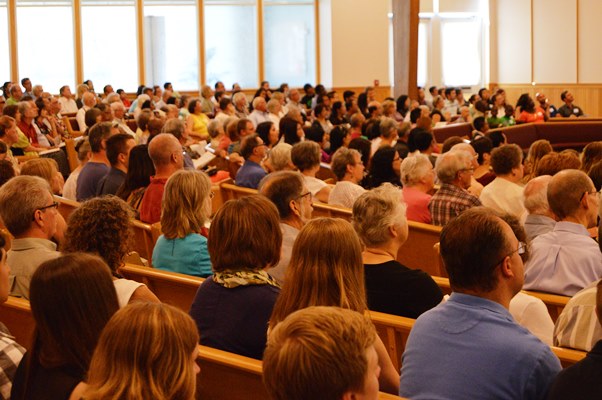
No. The Bible specifically forbids forsaking the assembling of the saints in Hebrews 10:24-25, “And let us consider one another in order to stir up love and good works, not forsaking the assembling of ourselves together, as is the manner of some, but exhorting one another, and so much the more as you see the Day approaching.” The assembly is an essential part of New Testament Christianity and has been since the time of Jesus.
There are numerous examples in the New Testament. Jesus assembled with people on a regular basis to teach (Matthew 5:1), to eat meals (Matthew 14:14-21), to heal the sick (Luke 6:17), to sing songs (Mark 14:26). During the last Passover that Jesus observed, he assembled with His disciples to eat the Passover and establish the Lord’s Supper (John 13). This assembly became a regular event because the disciples met together the day of Jesus resurrection and the week after that also (Luke 24:33, John 20:26).
The disciples assembled together in Acts 2 when the Holy Spirit came upon the apostles. Three thousand people obeyed the gospel that day, assembling to hear Peter preach the word of God (Acts 2:40-42). The church assembled in Acts 4:23 to hear what happened to Peter and John when they were arrested. They assembled in Acts 5:16 when Peter healed multitudes of people. They assembled in Acts 6 to discuss how to aid widows. There was an assembly in Acts 8 when Peter and John came to Samaria to lay hands on newly baptized Christians. Peter assembled with the disciples in Joppa in Acts 9:39 to raise Tabitha from the dead. Cornelius and his household assembled in Acts 10:33 to hear Peter preach to them. They assembled in Acts 11 to hear Peter’s testimony regarding the conversion of the gentiles. Paul and Barnabas assembled with the church in Antioch for a whole year (Acts 11:26). In Acts 14:27, they gathered the church together to hear Paul’s report on his missionary journey. It is also clear that the church assembled to take the Lord’s Supper. Acts 20:7 says that the disciples at Troas came together upon the first day of the week to break bread. First Corinthians 11:17, 18, 20, 33, 34 says that the disciples at Corinth came together to partake of the Lord’s Supper. First Corinthians 14:23 says that the whole church came together in one place.
Is the assembly part of the pattern the New Testament sets for the church? It is hard to see how it is not considering the frequency with which the church assembled. They probably assembled much more than we do, but the primary assembly was on the first day of the week to observe the Lord’s Supper.
The writer of the book of Hebrews is addressing Christians who were being tempted to go back to Judaism. One of the first things they would do is stop meeting with the church. He commands them not to do that and in the very next breath points out that willful sin leads to condemnation. “For if we sin willfully after we have received the knowledge of the truth, there no longer remains a sacrifice for sins, 27 but a certain fearful expectation of judgment, and fiery indignation which will devour the adversaries” (Hebrews 10:26-27). What is the willful sin that he references if not forsaking the assembly?
Online worship is not an assembly. It is not coming together with the church in one place. It cannot replace or take the place of assembling with the saints. It is an aid for people who are sick or disabled to worship as individuals without having to assemble with the saints. God only requires us to do what we are able to do (Matthew 25:15, Acts 11:29), and if we are able to assemble, then we have a divine obligation to do so.